Adding extra parking can make a residential property more practical.
Homeowners may want to widen an existing driveway because:
- Another vehicle has been added to the household
- Street parking is limited
- A work vehicle needs a dedicated space
- Guests regularly need parking
- The existing driveway is too narrow
- Turning into or out of the driveway is difficult
- Additional space is needed near a garage
An asphalt driveway extension may appear straightforward, but the new section should be planned carefully.
Paving over lawn or loose soil without proper preparation can create a section that settles, cracks or drains differently from the original driveway.
Delaney Construction Paving provides driveway paving, widening, asphalt repair and resurfacing for selected properties throughout Bucks County, Montgomery County, Delaware County and surrounding Pennsylvania communities.
Here are the main factors to consider before widening an asphalt driveway.
1. Decide How Much Additional Parking You Actually Need
The first step is determining what the new area needs to accomplish.
Homeowners may want to:
- Add one parking space
- Create side-by-side parking
- Widen a narrow approach
- Extend pavement beside the garage
- Add a turnaround area
- Create a pull-off area
- Improve access for larger vehicles
The amount of pavement needed depends on:
- Vehicle size
- Number of vehicles
- Door clearance
- Turning movement
- Walkway access
- Garage location
A wider driveway should improve function without creating unnecessary pavement or drainage problems.
2. Check Property Boundaries Before Expanding
A driveway extension should remain within the property area available for paving.
Before planning the new layout, property owners should consider:
- Lot boundaries
- Easements
- Shared access areas
- Utility corridors
- Neighboring driveways
- Sidewalks
- Road frontage
On tighter residential lots, the amount of available space may be limited.
The pavement should not be extended simply based on where the lawn appears to end.
Where boundaries are uncertain, they should be confirmed before construction.
3. Consider Local Requirements
Driveway widening can sometimes affect:
- Setbacks
- Curb cuts
- Sidewalk crossings
- Drainage
- Impervious surface limits
- Access points
Requirements can vary by municipality.
The scope of the project should account for any applicable local rules before work begins.
This is especially relevant when a driveway extension changes access at the road rather than only adding parking within the property.
4. Locate Utilities Before Excavation
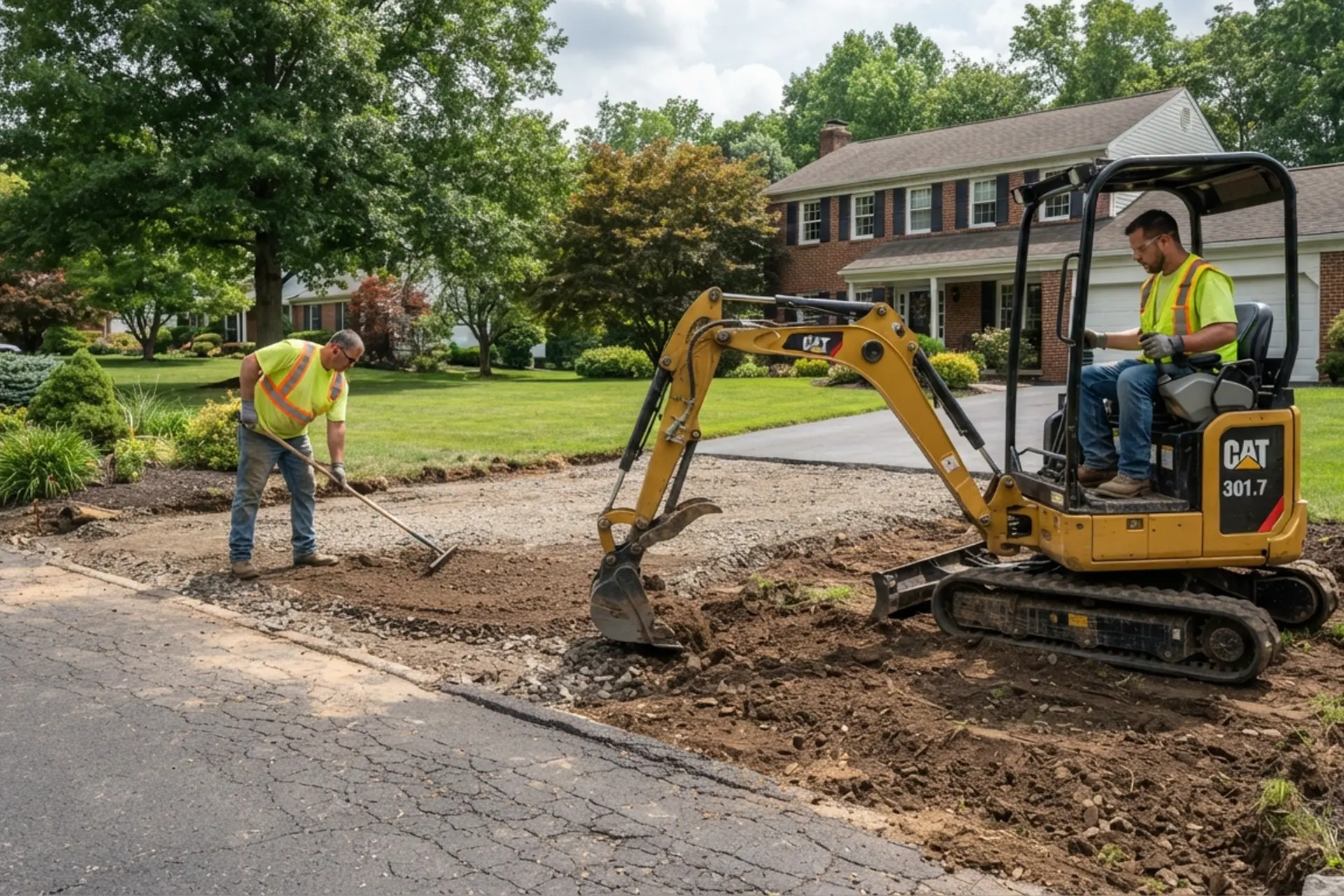
Driveway widening often requires excavation.
Underground utilities may be present near the proposed extension.
These can include:
- Electric lines
- Gas lines
- Water service
- Sewer lines
- Communications lines
- Drainage pipes
Utility locations should be considered before excavation begins.
Previously disturbed utility areas can also affect pavement stability if the material beneath the proposed extension has settled differently from the surrounding ground.
5. Do Not Pave Directly Over Lawn Without Proper Base Preparation
This is one of the most important considerations when widening a driveway.
Grass and topsoil are not suitable pavement support.
A new asphalt extension generally requires preparation beneath the finished surface.
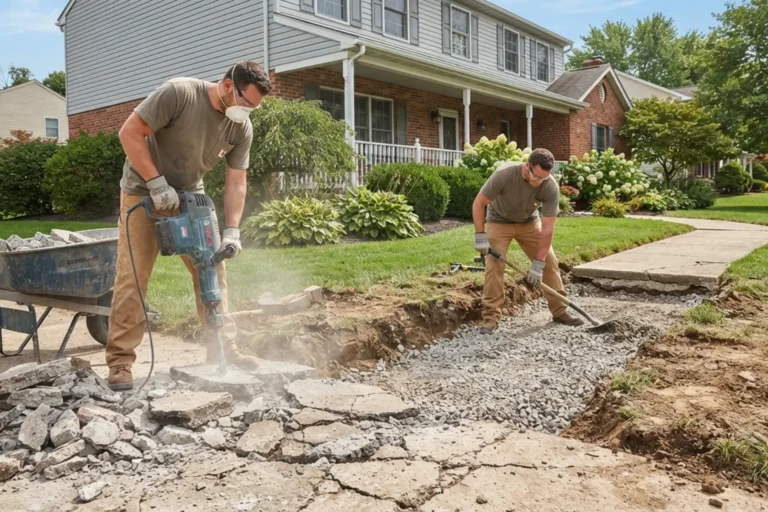
Depending on site conditions, this may include:
- Removing vegetation
- Excavating topsoil
- Removing unsuitable material
- Preparing the subgrade
- Installing aggregate base
- Compacting the base
- Establishing finished grade
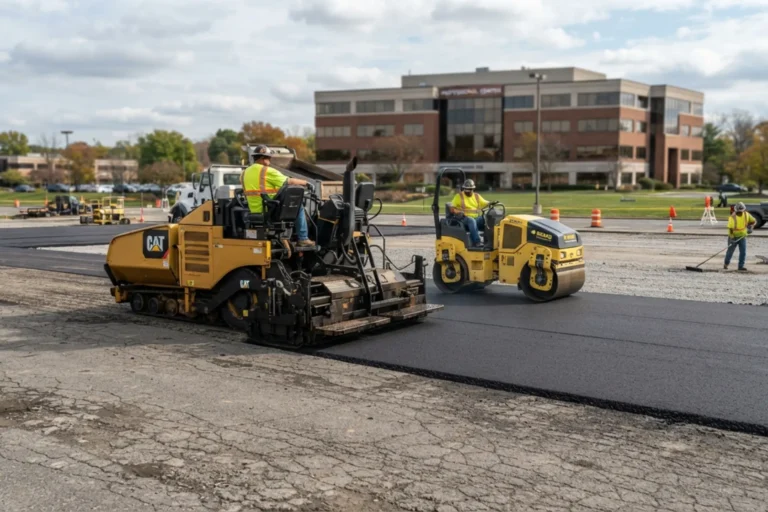
- Installing asphalt
The goal is to create support that works with the existing driveway.
If the new section has a weak base, it may settle differently and create cracking along the connection.
6. The New Asphalt Should Tie Into the Existing Driveway Properly
A driveway widening project usually creates a joint between existing and new pavement.
That transition should be planned carefully.
Important considerations include:
- Existing asphalt condition
- Existing pavement thickness
- Base elevation
- Finished surface height
- Drainage
- Edge condition
If the original driveway is badly cracked or settled, adding a new extension beside it may not address the older pavement problems.
In some cases, homeowners may want to coordinate widening with resurfacing or replacement so the overall driveway functions more consistently.
7. Evaluate the Condition of the Existing Driveway
Before investing in a new parking extension, look at the pavement already in place.
Questions to consider include:
- Is the driveway heavily cracked?
- Are there recurring potholes?
- Has the pavement settled?
- Are the edges breaking?
- Is standing water present?
- Has the driveway already been patched repeatedly?
If the existing driveway remains stable, a widening project may be completed independently.
If the original pavement is approaching broader failure, coordinating the extension with resurfacing or replacement may make more sense.
8. Drainage Can Change When You Add Pavement
Replacing lawn with asphalt changes how water moves across a property.
Grass and soil can absorb some rainfall.
Asphalt is an impervious surface, so water moves across it instead.
A driveway extension may therefore change runoff patterns.
Important questions include:
- Where will water flow after paving?
- Will runoff move toward the house?
- Will water collect near the garage?
- Will the extension create a low area?
- Will runoff affect neighboring property?
- Will water travel along the pavement edge?
The new section should work with the existing property grade.
9. Watch for Downspouts Near the Proposed Extension
Roof water can significantly affect paved areas.
Before widening a driveway, check whether downspouts discharge where the new pavement will be installed.
Water may need to be considered near:
- Garage corners
- House foundations
- Side yards
- Walkways
- Landscape beds
Directing concentrated roof runoff onto a driveway edge can contribute to erosion or water intrusion over time.
The paving layout should account for existing roof drainage.
10. Consider the Slope of the New Parking Area
A parking extension should be usable for vehicles while still allowing surface water to drain.
A surface that is too flat may hold water.
An excessive slope may make parking less comfortable or create stronger runoff.
The appropriate grade depends on the property.
It may need to coordinate with:
- Existing driveway slope
- Garage elevation
- Lawn grade
- Sidewalks
- Retaining walls
- Road elevation
The extension should feel like part of the existing driveway rather than a separate uneven area.
11. Avoid Creating a Low Joint Between Old and New Pavement
If the new extension is installed lower than the existing driveway, the joint may collect water.
If it is significantly higher, vehicles may feel a noticeable transition.
The finished elevation should therefore be carefully coordinated.
Poor elevation planning can contribute to:
- Ponding
- Edge deterioration
- Vehicle discomfort
- Water intrusion at the joint
A smooth transition is both a functional and drainage consideration.
12. Edge Support Matters on the New Section
One side of a driveway extension may remain exposed beside:
- Lawn
- Soil
- Landscaping
- Gravel
That pavement edge needs suitable support.
Without adequate support, repeated vehicle loads can contribute to:
- Edge cracking
- Crumbling
- Settlement
- Broken asphalt
Drivers should also avoid repeatedly placing tires directly on unsupported pavement edges.
13. Think About Vehicle Turning Before Paving
A driveway that technically fits two vehicles may still be inconvenient if drivers cannot maneuver easily.
Before finalizing the layout, consider:
- Vehicle length
- Turning radius
- Garage access
- Backing distance
- Walkways
- Steps
- Landscaping
A wider entrance or parking area may improve circulation, but only if the dimensions work with actual vehicle movement.
14. Consider Whether You Need a Turnaround Area
Longer driveways can sometimes benefit from a turnaround space.
This can reduce the need to reverse toward the roadway.
Possible configurations depend on:
- Available property area
- Grade
- Landscaping
- Drainage
- Vehicle size
A turnaround is a larger project than simply adding one parking strip, so the supporting base and overall drainage plan become even more important.
15. Driveway Widening Near a Retaining Wall Needs Extra Planning
Retaining walls and pavement can affect one another.
If a proposed parking extension is near a retaining wall, consider:
- Wall condition
- Drainage
- Soil support
- Distance from the wall
- Vehicle loads
- Elevation differences
A wall supporting pavement or vehicle loads may have different requirements from a small landscape wall.
Significant retaining-wall conditions may require engineering or additional planning.
Should You Widen the Driveway Before Resurfacing?
Sometimes coordinating the two projects is useful.
If the existing driveway is a suitable resurfacing candidate, the extension can potentially be constructed first and the broader surface plan coordinated afterward.
This may create a more consistent finished appearance.
However, whether resurfacing is appropriate depends on:
- Base stability
- Settlement
- Cracking
- Drainage
- Existing elevations
A driveway with major structural failure should not simply be resurfaced to match a new extension.
What If the Existing Driveway Needs Replacement?
If the current pavement has widespread failure, it may be more practical to plan the widening and replacement together.
This can allow the entire driveway to be evaluated for:
- Base preparation
- Drainage
- Finished grade
- Garage transition
- Road connection
- Parking layout
Coordinating the work may also reduce the number of separate pavement transitions.
Can You Add Asphalt Beside a Concrete Driveway?
A parking extension may sometimes involve asphalt next to concrete.
The two materials behave differently, so the transition should be planned carefully.
Important factors include:
- Finished elevation
- Edge condition
- Drainage
- Base support
The joint should allow practical vehicle movement without creating a water-collection point.
What About Gravel-to-Asphalt Extensions?
Some properties already use a gravel strip beside the paved driveway for extra parking.
Converting that area to asphalt may be possible.
However, existing gravel should not automatically be assumed to have adequate depth or compaction.
The area may need:
- Excavation
- Additional aggregate
- Regrading
- Compaction
before asphalt is installed.
The final preparation depends on the condition beneath the gravel.
Driveway Widening in Bucks County
Delaney Construction Paving provides selected driveway widening and paving services throughout Bucks County communities including:
- Perkasie
- Doylestown
- Quakertown
- Dublin
- Warrington
- Mechanicsville
Bucks County projects may range from compact residential parking additions to longer driveway extensions.
Driveway Extensions in Montgomery County
Selected Montgomery County service areas include:
- Lansdale
- Montgomeryville
- Harleysville
- Souderton
- Collegeville
- Limerick
- Norristown
- Plymouth Meeting
- Willow Grove
- Glenside
Property boundaries, existing driveways and surrounding grades should be evaluated before adding pavement.
Driveway Widening in Delaware County
Delaney Construction Paving also serves selected Delaware County communities including:
- Media
- Springfield
- Upper Darby
- Havertown
- Broomall
- Newtown Square
- Drexel Hill
- Ridley Park
- Aston
- Brookhaven
- Swarthmore
Compact properties may require especially careful planning around sidewalks, entrances, neighboring surfaces and drainage.
Common Mistakes to Avoid When Widening a Driveway
Homeowners should avoid treating driveway widening as simply “adding more asphalt.”
Common mistakes can include:
- Paving over topsoil
- Ignoring property boundaries
- Overlooking utilities
- Creating poor drainage
- Failing to support pavement edges
- Ignoring existing driveway failure
- Creating an uneven joint
- Making parking spaces too narrow
- Directing water toward buildings
Proper planning can help reduce these risks.
Request a Driveway Widening Estimate
Need additional parking or a wider asphalt driveway?
Delaney Construction Paving can evaluate the existing pavement, proposed extension area, drainage, base conditions, access and surrounding elevations before recommending an appropriate paving approach.
We serve selected properties throughout Bucks County, Montgomery County, Delaware County and surrounding Pennsylvania communities.
Phone: (610) 938-7569
Email: info@delaneyconstructionandpaving.com
Address: 857 Callowhill Rd, Perkasie, PA 18944