Cracked concrete does not always mean the entire surface needs to be replaced.
In some cases, localized repair or partial slab replacement may be enough to address a damaged section.
In other situations, widespread cracking, settlement, movement or base failure can make full replacement the more appropriate option.
The key is understanding whether the problem is mainly at the surface or extends into the slab, supporting base or surrounding drainage.
Delaney Construction Paving provides concrete repair, concrete paving and masonry services throughout selected communities in Bucks County, Montgomery County, Delaware County and surrounding Pennsylvania areas.
Here are the main factors to consider when deciding between concrete repair and replacement.
What Types of Exterior Concrete Can Be Repaired?
Concrete repair may be considered for:
- Walkways
- Front entrances
- Garage approaches
- Driveway sections
- Patios
- Parking pads
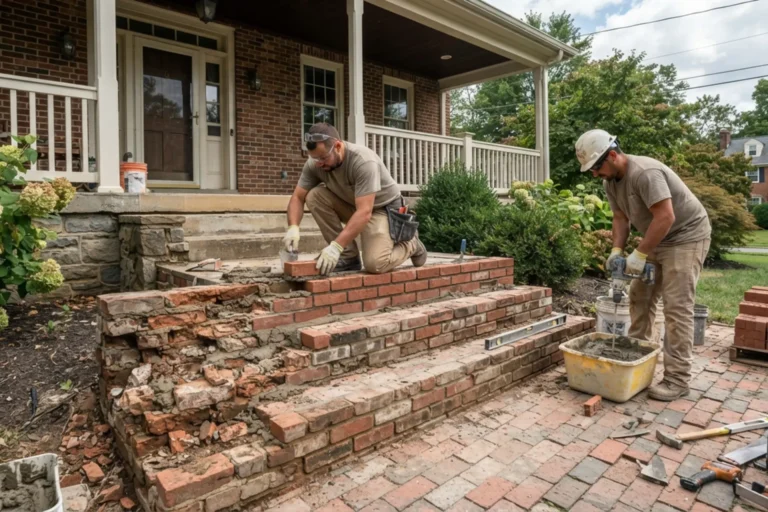
- Steps
- Stoops
- Small exterior slabs
The right approach depends on the extent and cause of the deterioration.
A localized crack in an otherwise stable walkway is very different from a slab that has settled several inches or fractured across multiple areas.
When Is Localized Concrete Repair Appropriate?
Concrete repair may make sense when damage is limited and the surrounding material remains stable.
1. The Crack Is Localized
One or two isolated cracks may not require replacing the entire slab.
Localized damage can sometimes be addressed if:
- The slab remains level
- Movement is limited
- The crack is not part of widespread failure
- The supporting base remains stable
The condition around the crack matters as much as the crack itself.
2. Only One Section Has Failed
Concrete surfaces are often divided into separate slabs or panels.
If one section has deteriorated while surrounding slabs remain stable, partial replacement may be possible.
Examples may include:
- One cracked walkway panel
- A broken corner
- One settled entrance slab
- A damaged garage approach
- A failed patio section
Replacing only the affected area can preserve surrounding concrete that remains in usable condition.
3. The Damage Is Mainly at the Surface
Some concrete problems are primarily surface-related.
These may include:
- Minor scaling
- Small chips
- Localized edge deterioration
- Limited surface spalling
The appropriate repair depends on the depth and condition of the surrounding material.
A superficial patch may not be suitable when the deterioration extends deeply into the slab.
When Is Concrete Replacement More Appropriate?
Replacement may be more suitable when deterioration is widespread or the slab has lost stable support.
1. The Slab Has Significant Settlement
Concrete that has dropped or tilted may indicate problems beneath the slab.
Possible causes include:
- Weak base material
- Poor compaction
- Soil movement
- Water erosion
- Utility disturbance
If the slab continues to move, applying a surface repair will not correct the underlying problem.
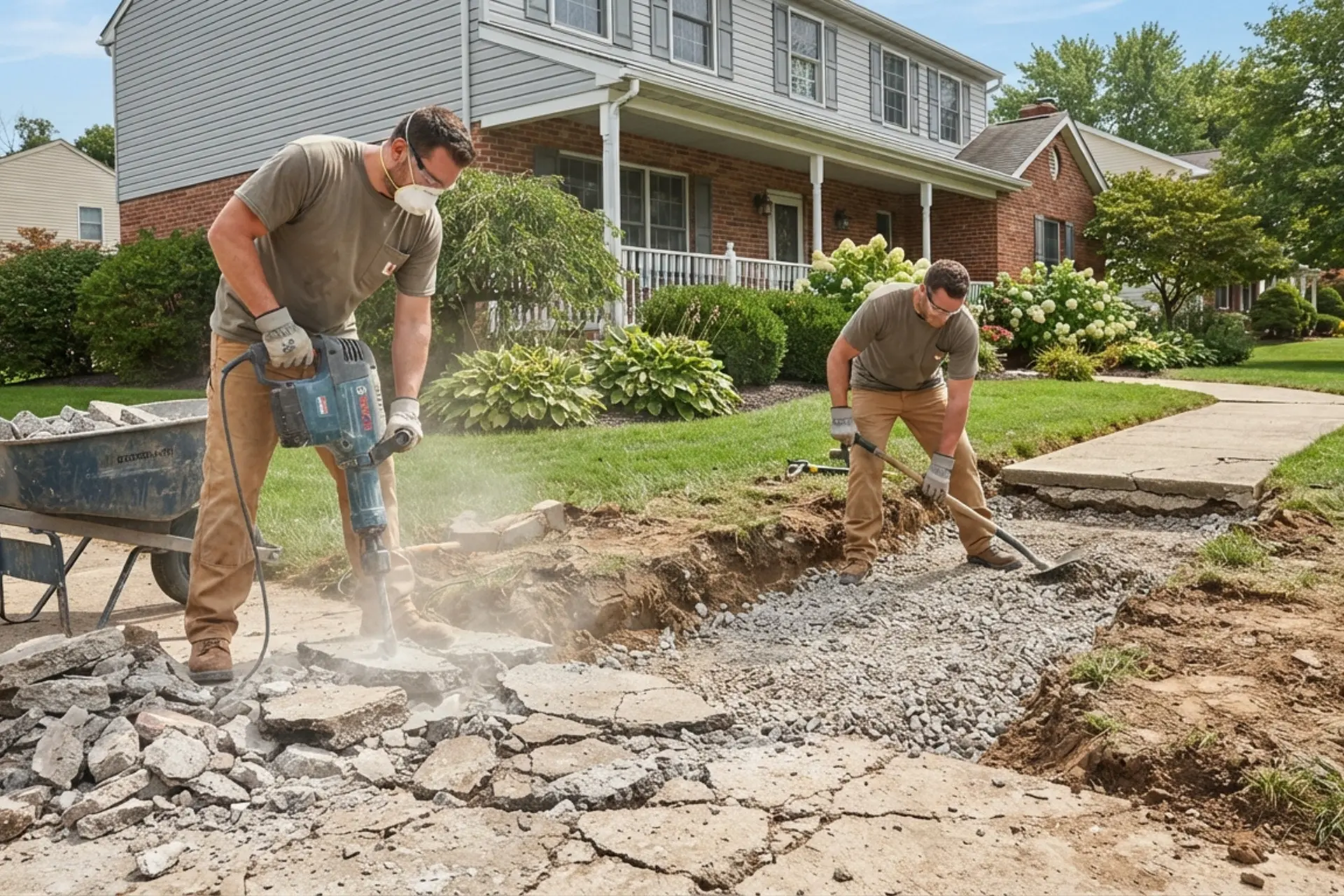
In these situations, removing and replacing the affected concrete may allow the supporting base to be evaluated and corrected.
2. Cracking Is Widespread
A single crack may be manageable.
Multiple intersecting cracks across the entire slab can indicate more extensive failure.
Widespread cracking may suggest:
- Base movement
- Structural stress
- Poor support
- Significant settlement
- Ongoing freeze-thaw damage
Replacing the slab may be more practical than attempting to patch numerous cracks.
3. Broken Concrete Creates Uneven Surfaces
Uneven concrete can affect everyday use.
Common examples include:
- Walkway trip edges
- Uneven steps
- Settled entrance slabs
- Broken driveway sections
- Raised patio edges
When the difference in elevation is significant, replacement may provide a better opportunity to restore a more consistent surface.
4. Previous Repairs Keep Failing
Repeated patching can be a sign that the underlying cause has not been addressed.
For example:
- A crack reopens after repair
- A patch breaks away
- Settlement continues
- Water keeps reaching the same area
If failure is recurring, the slab and base may need more complete reconstruction.
Why Does Exterior Concrete Crack?
Concrete can crack for several reasons.
Common causes include:
- Drying shrinkage
- Freeze-thaw exposure
- Base movement
- Settlement
- Water intrusion
- Heavy loads
- Poor joint placement
- Tree roots
- Utility work
Not every crack indicates major failure.
The pattern, width, movement and surrounding condition help determine how significant the problem may be.
How Settlement Affects Concrete
Settlement occurs when the material supporting a slab moves or loses stability.
This can create:
- Sunken slabs
- Uneven joints
- Cracks
- Drainage problems
- Trip edges
Settlement may develop because of:
- Inadequate compaction
- Soil movement
- Water erosion
- Previous excavation
- Poor drainage
If the supporting material continues to move, a surface repair may only mask the problem temporarily.
Drainage Can Affect Concrete Too
Water is not only an asphalt concern.
Concrete surfaces can also be affected by poor drainage.
Water may contribute to:
- Base erosion
- Settlement
- Freeze-thaw damage
- Surface scaling
- Joint deterioration
Watch for:
- Water pooling near slabs
- Downspouts discharging beside concrete
- Soil washing away at edges
- Low areas holding water
- Settlement near drains
Drainage should be considered when repairing or replacing exterior concrete.
Concrete Walkway Repair vs Replacement
Walkways often develop:
- Cracks
- Settled panels
- Broken corners
- Uneven joints
Localized repair may be possible when one area has failed.
Replacement may be more appropriate when:
- Multiple panels are damaged
- The walkway has widespread settlement
- Drainage problems are present
- The overall grade needs correction
The relationship with steps, entrances and adjacent landscaping should also be considered.
Concrete Driveway Repair vs Replacement
Concrete driveways carry heavier loads than walkways or patios.
Signs of more significant driveway deterioration may include:
- Wide cracks
- Broken slab sections
- Settlement
- Uneven garage transitions
- Repeated patch failure
If only one section has failed, partial slab replacement may be possible.
Widespread structural damage may require broader reconstruction.
Concrete Step Repair vs Rebuilding
Steps and stoops require special attention because they involve changes in elevation.
Possible problems include:
- Broken step edges
- Cracked landings
- Loose masonry
- Settlement
- Uneven risers
Localized repair may work when damage is minor and the structure remains stable.
More extensive movement may require partial or complete rebuilding.
Patio Concrete Repair vs Replacement
Patios can develop:
- Surface cracks
- Settled slabs
- Broken edges
- Drainage problems
Localized repairs may be suitable when damage is limited.
Replacement may be more practical when the patio:
- Has widespread cracking
- Has major settlement
- Slopes toward the building
- Contains several failed sections
The finished surface should support both drainage and comfortable everyday use.
Will New Concrete Match Old Concrete?
Not exactly in many cases.
New concrete can differ from older material because of:
- Age
- Weathering
- Aggregate
- Cement content
- Finishing
- Exposure
Even when a repair is structurally successful, the new section may appear lighter or darker than the surrounding concrete.
Homeowners should consider this when choosing between localized repair and broader replacement.
Should You Repair Cracks Before Winter?
Cracks and open joints can allow water to enter.
In Pennsylvania, freezing and thawing conditions can contribute to further movement and deterioration.
Addressing damage before it expands may help reduce future deterioration, but the correct repair depends on the underlying cause.
A crack caused by settlement requires a different approach from one caused only by surface shrinkage.
Concrete Repair in Bucks County
Delaney Construction Paving provides selected concrete repair and replacement services throughout Bucks County communities including:
- Perkasie
- Doylestown
- Quakertown
- Dublin
- Warrington
- Mechanicsville
Projects may include walkways, entrances, driveway sections, patios and steps.
Concrete Repair in Montgomery County
Selected Montgomery County service areas include:
- Lansdale
- Montgomeryville
- Harleysville
- Souderton
- Collegeville
- Limerick
- Norristown
- Plymouth Meeting
- Willow Grove
- Glenside
Established properties may have older concrete that requires evaluation for localized repair versus replacement.
Concrete Repair in Delaware County
Selected Delaware County service areas include:
- Media
- Springfield
- Upper Darby
- Havertown
- Broomall
- Newtown Square
- Drexel Hill
- Ridley Park
- Aston
- Brookhaven
- Swarthmore
Walkways, entrances, garage approaches and patios may all require site-specific recommendations based on settlement, drainage and slab condition.
Request a Concrete Repair Estimate
If your walkway, driveway, patio, entrance or steps are cracked, settled or uneven, the first step is determining whether the damage is localized or part of a broader structural issue.
Delaney Construction Paving can evaluate the concrete, supporting base, drainage and surrounding conditions before recommending repair, partial slab replacement or complete replacement.
We serve selected properties throughout Bucks County, Montgomery County, Delaware County and surrounding Pennsylvania communities.
Phone: (610) 938-7569
Email: info@delaneyconstructionandpaving.com
Address: 857 Callowhill Rd, Perkasie, PA 18944