A cracked, faded or uneven asphalt driveway does not always need to be completely removed and rebuilt.
In some cases, driveway resurfacing can restore the pavement by installing a new asphalt layer over a properly prepared existing surface. In other situations, deterioration underneath the asphalt makes complete driveway replacement the more appropriate approach.
Knowing the difference can help homeowners avoid investing in surface work that does not address deeper pavement problems.
Delaney Construction Paving provides driveway paving, resurfacing and asphalt repair throughout selected communities in Bucks County, Montgomery County, Delaware County and surrounding Pennsylvania areas.
Here are the main factors we consider when evaluating whether an asphalt driveway may be resurfaced or should be replaced.
What Is Asphalt Driveway Resurfacing?
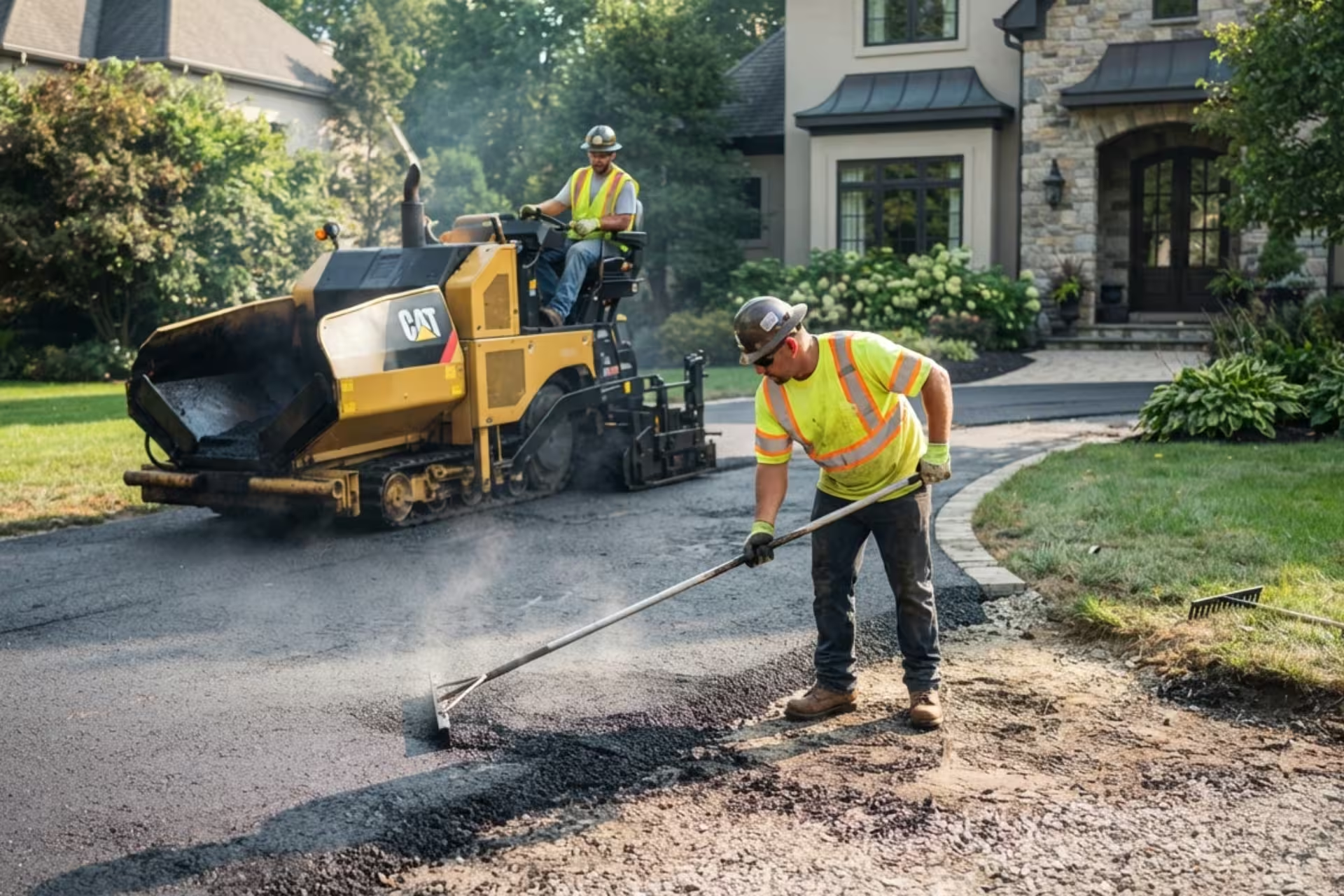
Driveway resurfacing involves preparing the existing pavement and installing a new asphalt layer over it.
Before the new surface is installed, preparation may include:
- Cleaning the existing driveway
- Removing loose material
- Repairing potholes
- Cutting out localized failed areas
- Correcting damaged edges
- Preparing garage and roadway transitions
- Addressing repairable cracks
The existing driveway essentially becomes part of the supporting structure for the new asphalt surface.
Because of this, resurfacing generally works best when the pavement underneath remains reasonably stable.
What Is Complete Driveway Replacement?
Driveway replacement involves removing the existing asphalt so the material underneath can be evaluated and prepared before new pavement is installed.
Depending on site conditions, replacement may involve:
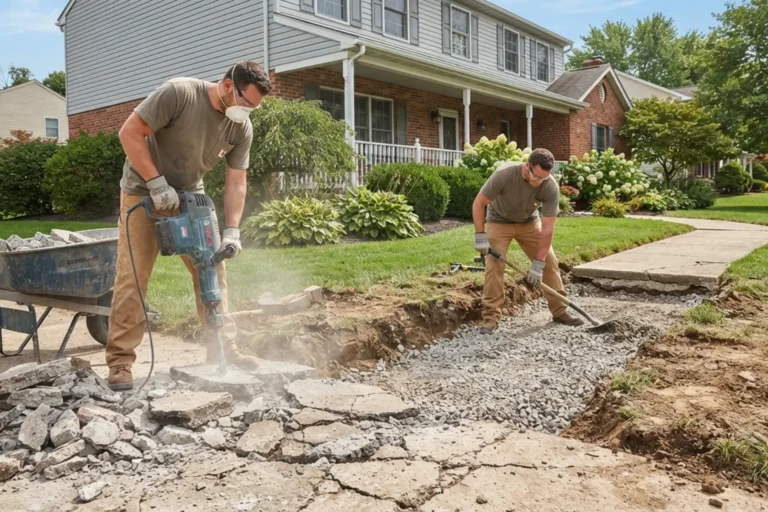
- Removing old asphalt
- Excavating weak material
- Correcting soft areas
- Rebuilding aggregate base
- Adjusting drainage or grades
- Compacting the supporting material
- Preparing pavement edges and transitions
- Installing new asphalt
Replacement provides an opportunity to address problems underneath the pavement that resurfacing cannot correct.
When Can an Asphalt Driveway Be Resurfaced?
Resurfacing may be worth considering when deterioration is mainly affecting the upper portion of the pavement.
Several conditions can indicate that resurfacing may be possible.
1. The Driveway Base Appears Stable
The most important consideration is what is happening underneath the asphalt.
If the pavement has remained reasonably level and does not show widespread movement, the base may still be providing adequate support.
A stable base creates a better foundation for a new asphalt layer.
2. Cracking Is Limited
Some cracking does not automatically mean an entire driveway needs to be replaced.
Individual cracks or localized damaged areas may sometimes be repaired as part of resurfacing preparation.
The situation changes when cracking becomes widespread.
A network of interconnected cracks—often called alligator cracking—can indicate movement or weakness underneath the asphalt.
Placing another layer over extensive base-related cracking may allow those problems to eventually affect the new surface.
3. Settlement Is Minor
Small localized depressions may sometimes be corrected during preparation.
Large areas that have dropped, shifted or become severely uneven can indicate problems with:
- Supporting aggregate
- Soil conditions
- Water movement
- Previous excavation
- Compaction
When settlement is extensive, simply covering it with another asphalt layer may not address the cause.
4. Existing Elevations Allow Another Asphalt Layer
Resurfacing raises the finished elevation of the driveway.
That may affect:
- Garage-floor transitions
- Public sidewalks
- Concrete aprons
- Walkways
- Steps
- Drainage structures
- Road connections
Before resurfacing, these elevations should be evaluated to make sure adding another asphalt layer will not create an undesirable transition or drainage issue.
When Is Driveway Replacement More Appropriate?
There are several situations where removing the existing pavement may provide a more appropriate solution.
Widespread Alligator Cracking
Interconnected cracking across large sections of pavement often indicates deterioration beneath the surface.
While individual cracks can sometimes be repaired, widespread cracking can signal that the pavement structure has lost support.
Repeated Potholes
One pothole may be a localized problem.
Multiple potholes that return after previous repairs may indicate:
- Water entering the pavement
- Weak aggregate
- Poor drainage
- Base erosion
- Ongoing movement
Repairing the upper surface repeatedly may not solve those underlying conditions.
Significant Settlement
A driveway that contains major low spots, sinking areas or noticeably uneven sections may require work beneath the asphalt.
Removing the old pavement allows failed supporting material to be evaluated and corrected before new asphalt is installed.
Failed Pavement Edges
Driveway edges can deteriorate when they lack adequate support or when water erodes the material beside and beneath them.
Extensive edge failure may need more than a surface overlay, particularly if the driveway is also showing cracking or settlement.
Drainage Problems Are Contributing to Failure
Standing water is not merely a cosmetic driveway problem.
Water can enter cracks and pavement edges, reach the supporting base and contribute to erosion or movement.
Common signs of drainage-related pavement problems include:
- Water collecting in depressions
- Repeated potholes in the same area
- Cracking near low points
- Eroded driveway edges
- Settlement around drains
- Water moving toward the garage
When drainage and pavement failure are connected, the water problem should be considered as part of the paving plan.
Resurfacing Does Not Fix Base Failure
This is one of the most important distinctions between resurfacing and replacement.
Resurfacing renews the upper asphalt surface.
It does not automatically rebuild:
- Unstable soil
- Eroded aggregate
- Poorly compacted material
- Major settlement
- Failed drainage conditions
That is why two driveways that appear similarly cracked from above may require completely different approaches.
One may have a stable foundation suitable for resurfacing, while the other may have extensive problems beneath the pavement.
A site evaluation helps identify that difference.
What About Localized Asphalt Repair?
Not every damaged driveway needs resurfacing or full replacement.
When deterioration affects only a limited area, localized asphalt repair may be appropriate.
Examples include:
- Individual potholes
- Broken edges
- Small depressions
- Failed utility patches
- Damage near a drain
- Localized garage-transition failure
The failed asphalt can sometimes be removed, the supporting material corrected and new asphalt installed in that section.
However, when similar problems occur throughout the driveway, broader work may make more sense than continuing to patch individual areas.
Can an Old Blacktop Driveway Be Resurfaced?
Possibly.
“Blacktop” and “asphalt” are commonly used to describe the same residential paving material.
The age of a driveway alone does not determine whether resurfacing is appropriate.
More important factors include:
- Base stability
- Crack pattern
- Settlement
- Drainage
- Existing pavement thickness
- Surface condition
- Elevations at garages and roads
An older driveway with a stable foundation may sometimes be a better resurfacing candidate than a newer driveway with major base problems.
Why Base Preparation Matters
Whether a driveway is being repaired, resurfaced or completely replaced, the condition underneath the asphalt matters.
A properly prepared driveway may involve:
- Removing unsuitable material
- Installing aggregate
- Establishing appropriate grades
- Compacting the base
- Correcting soft areas
- Supporting pavement edges
- Planning transitions
- Considering drainage
The asphalt surface is only the visible portion of the driveway system.
Problems below it can eventually become visible as cracking, settlement, potholes and depressions.
Pennsylvania Weather and Asphalt Driveways
Pennsylvania driveways experience repeated seasonal temperature changes.
Water can enter pavement cracks or edges and then be affected by freezing and thawing conditions.
Over time, this can contribute to:
- Crack expansion
- Surface deterioration
- Base movement
- Potholes
- Edge failure
Keeping water from remaining on or beneath the pavement is therefore an important part of driveway planning and maintenance.
Driveway Paving Across Bucks, Montgomery and Delaware Counties
Delaney Construction Paving provides asphalt driveway services throughout selected Pennsylvania communities.
Our service areas include communities such as:
Bucks County
- Perkasie
- Doylestown
- Quakertown
- Dublin
- Warrington
Montgomery County
- Lansdale
- Montgomeryville
- Harleysville
- Souderton
- Collegeville
- Limerick
Delaware County
- Media
- Springfield
- Havertown
- Broomall
- Newtown Square
- Drexel Hill
- Aston
- Brookhaven
- Swarthmore
Property conditions vary considerably even within the same community.
That is why the existing pavement and supporting conditions should be evaluated rather than deciding between resurfacing and replacement based only on age.
Request a Driveway Evaluation
If your asphalt driveway is cracked, settled, patched or showing signs of deterioration, the first step is determining whether the problem is primarily at the surface or extends into the supporting base.
Delaney Construction Paving provides driveway paving, asphalt repair and resurfacing for selected properties throughout Bucks County, Montgomery County, Delaware County and surrounding Pennsylvania communities.
Phone: (610) 938-7569
Email: info@delaneyconstructionandpaving.com
Address: 857 Callowhill Rd, Perkasie, PA 18944