A worn parking lot does not always need complete reconstruction.
In some cases, localized repairs followed by asphalt resurfacing can renew the pavement and provide a more uniform driving surface.
In other situations, widespread cracking, settlement, potholes or base failure indicate that removing and rebuilding larger sections—or the entire lot—may be more appropriate.
The correct decision depends on more than appearance.
Important factors include:
- Base stability
- Crack pattern
- Pothole frequency
- Settlement
- Drainage
- Traffic loads
- Existing pavement thickness
- Elevations around entrances and drains
- Previous repairs
Delaney Construction Paving provides selected parking lot paving, asphalt repair and resurfacing services for commercial and managed properties throughout Bucks County, Montgomery County, Delaware County and surrounding Pennsylvania communities.
Here is how to tell when resurfacing may be enough and when broader reconstruction should be considered.
What Is Parking Lot Resurfacing?
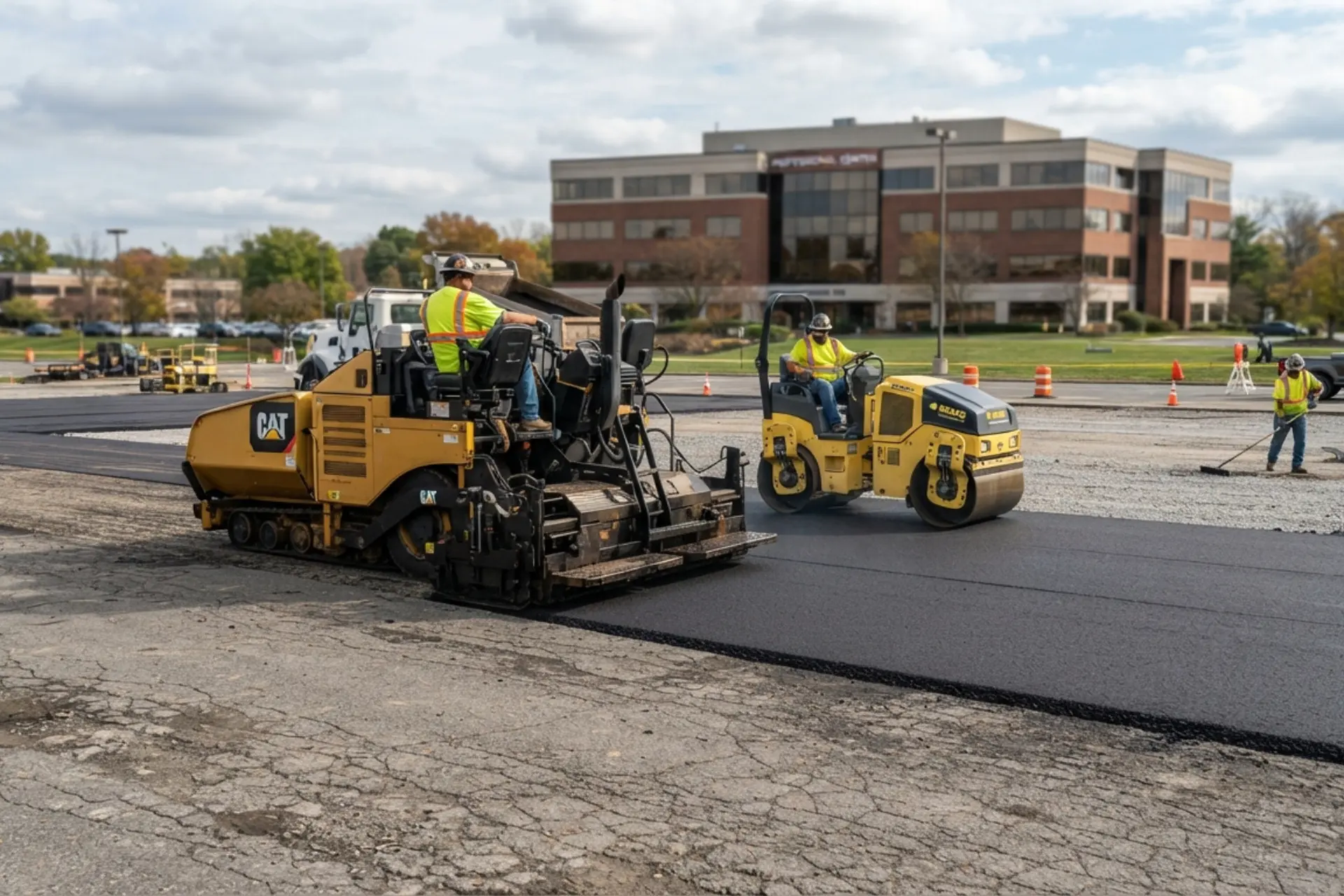
Parking lot resurfacing involves preparing the existing asphalt and installing a new asphalt layer over it.
Preparation may include:
- Cleaning the pavement
- Repairing potholes
- Cutting out localized failed areas
- Rebuilding damaged sections
- Preparing edges
- Adjusting transitions
- Addressing repairable cracks
The existing pavement remains part of the supporting structure.
That means resurfacing generally works best when the underlying base and most of the pavement remain reasonably stable.
When Is Parking Lot Resurfacing a Good Option?
Resurfacing may be appropriate when deterioration is mainly affecting the upper pavement layer.
1. The Supporting Base Is Still Stable
Base stability is one of the most important considerations.
If the parking lot remains relatively level and does not show widespread movement, the underlying support may still be suitable for an overlay.
A stable base creates a better foundation for the new asphalt layer.
2. Cracking Is Limited or Repairable
Some cracking does not automatically require complete replacement.
Localized cracks and smaller failed sections may be repaired as part of resurfacing preparation.
However, the crack pattern matters.
Widespread alligator cracking can indicate deeper structural deterioration.
Installing another asphalt layer over extensive base-related cracking may not address the cause of the failure.
3. Potholes Are Localized
One or several isolated potholes may be repairable before resurfacing.
The failed pavement can be removed and the supporting material corrected locally.
If potholes are appearing throughout the lot, broader base deterioration may be present.
At that point, repeated patching and resurfacing may not be the most practical approach.
4. Settlement Is Minor
Small localized depressions may sometimes be corrected during preparation.
Widespread settlement can indicate:
- Weak supporting material
- Water-related erosion
- Poor compaction
- Utility settlement
- Soil movement
If large sections of the parking lot have moved, resurfacing may only cover the symptom.
5. Existing Elevations Allow Another Asphalt Layer
Resurfacing raises the finished pavement elevation.
This may affect:
- Building entrances
- Garage doors
- Loading areas
- Drains
- Curbs
- Sidewalks
- Adjacent concrete
- Road connections
These fixed elevations should be evaluated before another layer is installed.
If the existing pavement is already too high at an entrance or drainage structure, resurfacing may not be practical without additional adjustment.
When Is Parking Lot Replacement More Appropriate?
Complete replacement or broader reconstruction may be more appropriate when pavement failure is extensive.
Common signs include:
- Widespread alligator cracking
- Multiple recurring potholes
- Major settlement
- Large depressed areas
- Extensive edge breakdown
- Base failure
- Severe drainage-related deterioration
Removing the asphalt allows the supporting material to be evaluated directly.
Weak sections can then be corrected before new pavement is installed.
What Does Parking Lot Replacement Involve?
The exact scope depends on the property, but replacement may include:
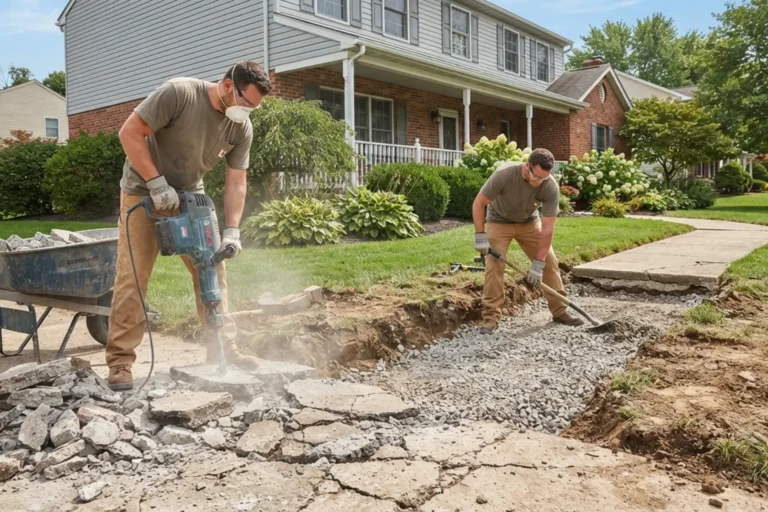
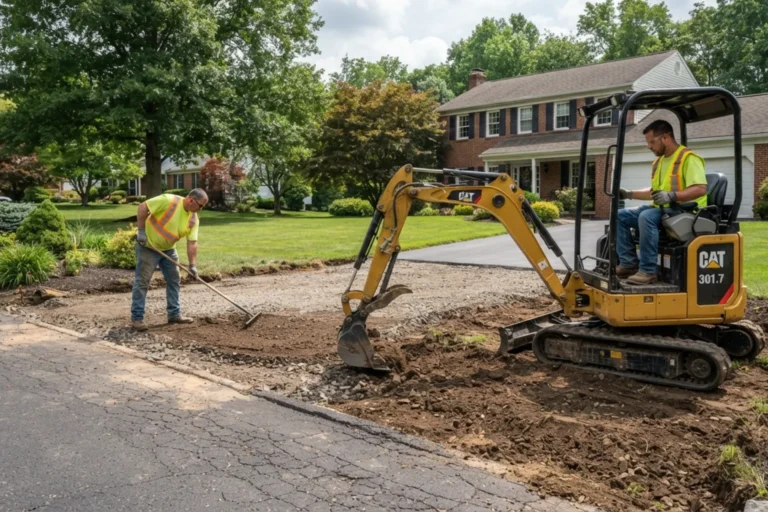
- Removing deteriorated asphalt
- Excavating failed supporting material
- Correcting soft areas
- Installing or rebuilding aggregate base
- Establishing grade
- Compacting the base
- Preparing transitions
- Installing new asphalt
The main advantage of reconstruction is the opportunity to address conditions beneath the visible surface.
How Do Potholes Affect the Decision?
Potholes are one of the most obvious signs of parking lot deterioration.
A pothole may develop because of:
- Water intrusion
- Weak base material
- Freeze-thaw exposure
- Heavy traffic
- Failed patches
- Utility settlement
A localized pothole can often be repaired.
But repeated potholes in several areas may indicate that the pavement is losing support across a larger section.
In that situation, continued patching may become less practical than resurfacing or reconstruction.
Why Do Parking Lot Repairs Sometimes Fail?
A surface repair may fail when the underlying cause remains.
For example:
- A pothole is filled, but the base remains weak
- A depression is covered, but settlement continues
- An edge is patched, but erosion continues beside it
- Cracking is sealed, but water continues entering the pavement
The visible damage is only part of the problem.
A successful repair should consider what caused the pavement to fail.
Drainage Should Be Part of Parking Lot Planning
Water management is a major part of parking lot performance.
Drainage problems can contribute to:
- Potholes
- Base erosion
- Settlement
- Cracking
- Edge failure
Water may collect because of:
- Surface depressions
- Poor grading
- Blocked drainage paths
- Settlement around drains
- Changes in surrounding pavement
Standing water should be evaluated before resurfacing.
Installing a smooth new surface over an existing low area may not solve the drainage problem.
What About Repairs Around Drains?
Drainage structures can be common failure points.
Pavement around a drain may deteriorate because of:
- Settlement
- Water intrusion
- Poor transitions
- Base movement
Localized reconstruction may be needed around the drain before resurfacing.
The finished pavement should coordinate with the drainage structure so water can reach it effectively.
How Does Commercial Traffic Affect Pavement?
Parking lots may experience a wider range of vehicle loads than residential driveways.
Traffic may include:
- Passenger vehicles
- Delivery trucks
- Service vehicles
- Refuse trucks
- Moving trucks
- Maintenance vehicles
Areas with frequent turning, stopping or heavier loads may deteriorate faster.
These conditions should be considered when evaluating:
- Failed drive lanes
- Loading areas
- Entrances
- Service areas
A repair strategy that works for a lightly used parking bay may not be appropriate for a heavily trafficked access lane.
Parking Lot Entrances and Exits Need Special Attention
Entrances and exits often receive concentrated traffic.
Common problems may include:
- Rutting
- Edge deterioration
- Cracking
- Depressions
- Failed transitions
The connection between the parking lot and roadway should also be evaluated.
If an entrance is settled or badly cracked, that area may need localized reconstruction even if the rest of the lot is suitable for resurfacing.
Can Part of a Parking Lot Be Rebuilt?
Yes.
Not every project requires treating the entire lot the same way.
A parking lot may contain:
- Stable areas
- Failed drive lanes
- Settled sections
- Localized drainage problems
In some cases, failed areas can be reconstructed while other sections are repaired and resurfaced.
This type of mixed approach can be appropriate when deterioration is not uniform.
Can Parking Lot Work Be Phased?
Depending on the site layout, some commercial projects may be completed in sections.
Phasing may help maintain:
- Customer access
- Employee parking
- Tenant access
- Delivery routes
- Emergency access
The feasibility depends on:
- Parking lot layout
- Traffic flow
- Number of entrances
- Project scope
- Operating hours
Access planning should be considered before construction begins.
What About Striping and Accessibility Layouts?
Parking lot paving can affect existing stall layouts and access routes.
Striping, accessibility design, engineering and related work may require separate planning or services.
These items should be coordinated with the paving scope where applicable.
The pavement itself should be installed with surrounding entrances, sidewalks and drainage in mind.
When Should You Resurface Instead of Keep Patching?
Repeated patching can make sense when failures are truly isolated.
But if repairs are needed across many parts of the lot, resurfacing may provide a more uniform surface when the base remains stable.
Resurfacing may be worth considering when:
- The pavement is generally level
- Structural cracking is limited
- Potholes can be repaired first
- Existing elevations remain workable
- Drainage is functioning
It is not intended to cover widespread base failure.
How We Evaluate a Parking Lot
A parking lot evaluation may consider:
- Overall pavement condition
- Crack pattern
- Potholes
- Settlement
- Drainage
- Failed edges
- Traffic areas
- Entrances and exits
- Existing repairs
- Surrounding concrete
- Access requirements
These factors help determine whether localized repair, resurfacing or reconstruction is more appropriate.
Commercial Paving in Bucks County
Delaney Construction Paving provides selected commercial and managed-property asphalt services in Bucks County.
Service areas include communities such as:
- Perkasie
- Doylestown
- Quakertown
- Dublin
- Warrington
Projects may include small parking lots, access areas, pothole repair and resurfacing.
Commercial Paving in Montgomery County
Selected Montgomery County service areas include:
- Lansdale
- Montgomeryville
- Norristown
- Plymouth Meeting
- Conshohocken
- Collegeville
- Limerick
- Willow Grove
- Glenside
Commercial properties may require additional coordination around traffic flow, deliveries and temporary access.
Commercial Paving in Delaware County
Selected Delaware County service areas include:
- Media
- Springfield
- Upper Darby
- Havertown
- Broomall
- Newtown Square
- Drexel Hill
- Ridley Park
- Aston
- Brookhaven
- Swarthmore
Smaller managed properties and commercial parking areas may have limited space for phasing, making access planning especially important.
Request a Parking Lot Paving Estimate
If your parking lot has recurring potholes, cracking, settlement or worn pavement, the first step is determining whether the failure is mainly at the surface or extends into the supporting base.
Delaney Construction Paving provides selected parking lot paving, resurfacing and asphalt repair services throughout Bucks County, Montgomery County, Delaware County and surrounding Pennsylvania communities.
Phone: (610) 938-7569
Email: info@delaneyconstructionandpaving.com
Address: 857 Callowhill Rd, Perkasie, PA 18944