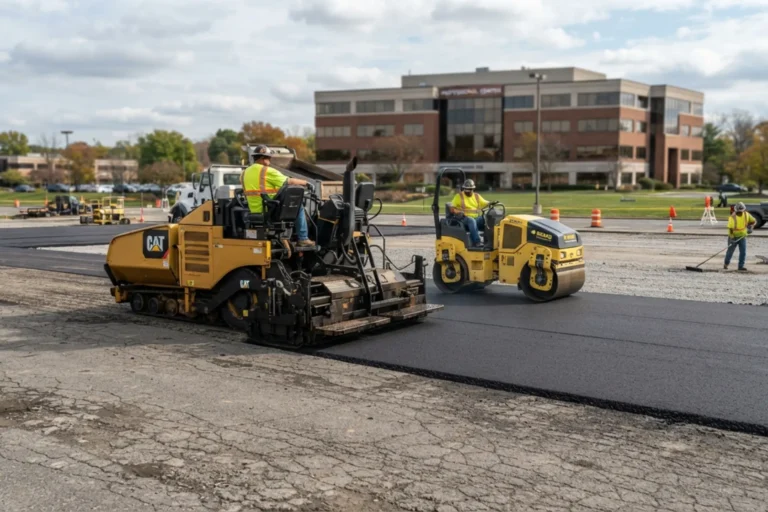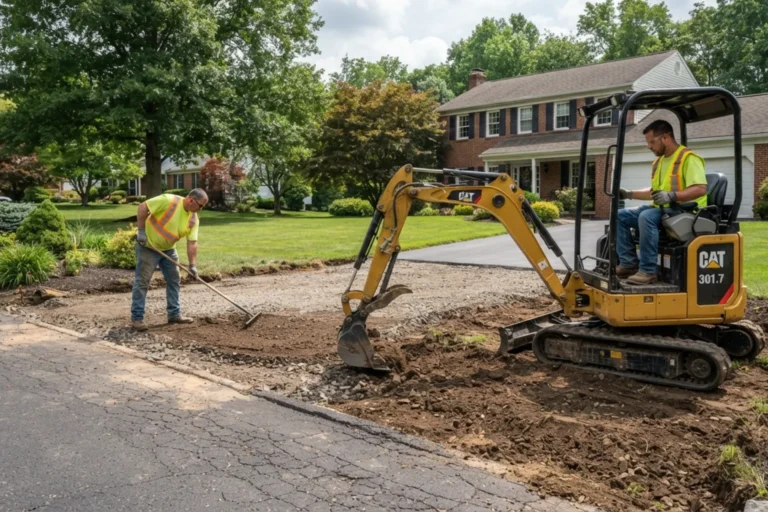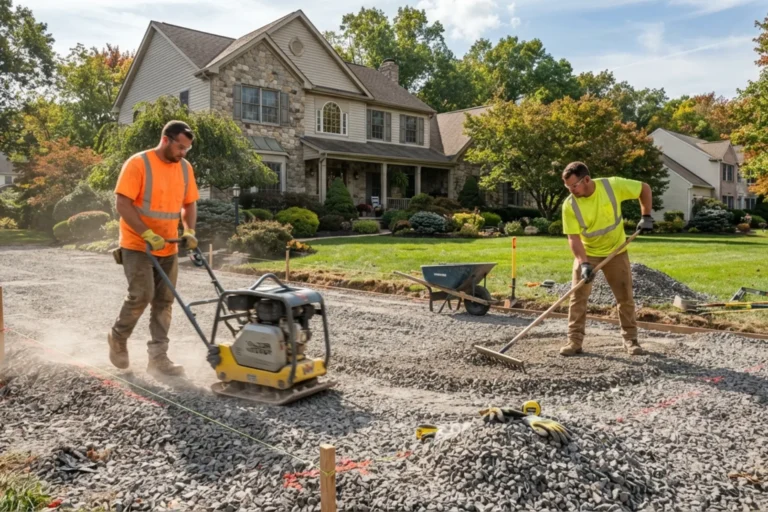
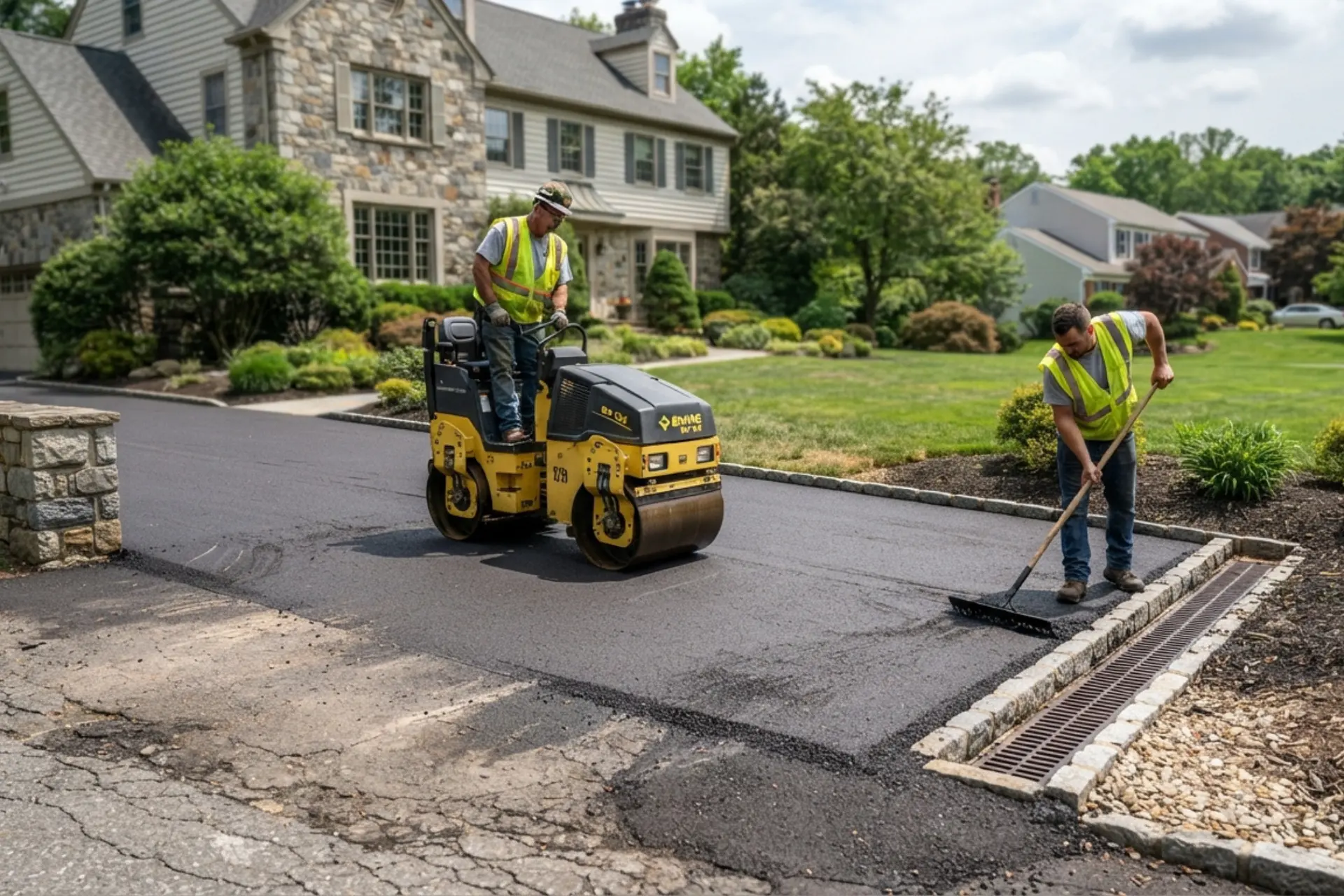
A new asphalt driveway can improve vehicle access, parking and the overall function of a residential property.
But a driveway is more than the black surface visible after paving is complete.
The performance of the finished pavement depends heavily on:
- Supporting base
- Excavation
- Compaction
- Surface grade
- Drainage
- Edge support
- Garage transitions
- Road connections
- Intended vehicle use
For Bucks County homeowners, these factors are especially important when replacing an older driveway, converting a gravel area to asphalt, widening existing pavement or creating additional parking.
Delaney Construction Paving provides asphalt driveway services throughout selected Bucks County communities, including Perkasie, Doylestown, Quakertown, Dublin, Warrington, Mechanicsville and surrounding areas.
Here is what homeowners should consider before planning a driveway paving project.
Start With the Condition of the Existing Driveway
The first question is whether the property already has a paved driveway.
Existing driveways can reveal useful information about:
- Drainage
- Settlement
- Base stability
- Vehicle movement
- Garage elevations
- Weak areas
- Previous repairs
Signs of deterioration may include:
- Cracks
- Potholes
- Depressions
- Broken edges
- Standing water
- Failed patches
- Settlement near the garage
- Uneven transitions
These conditions help determine whether the existing driveway may be repaired, resurfaced or should be removed and replaced.
Is This a New Driveway or a Replacement?
A new driveway built where no pavement currently exists requires different preparation from replacing an existing asphalt driveway.
New Asphalt Driveway
A new driveway may require:
- Excavation
- Subgrade preparation
- Aggregate installation
- Compaction
- Grading
- Edge preparation
- Asphalt installation
The existing soil, slope and drainage pattern must be considered.
Asphalt Driveway Replacement
Replacement may involve:
- Removing old asphalt
- Evaluating the existing base
- Correcting weak sections
- Adding or replacing aggregate
- Regrading
- Installing new pavement
Existing pavement should not automatically be treated as a suitable foundation.
If the driveway failed because of weak supporting material, simply replacing the asphalt without addressing that condition may leave the underlying problem unresolved.
Why Base Preparation Matters
The supporting base is one of the most important parts of an asphalt driveway.
It helps carry vehicle loads and provides a stable surface for the pavement above.
Base preparation may involve:
- Removing unsuitable soil
- Correcting soft areas
- Installing aggregate
- Establishing appropriate depth
- Compacting the material
- Preparing edges
A weak base can contribute to:
- Settlement
- Cracking
- Rutting
- Depressions
- Potholes
The quality of the finished surface cannot compensate for unstable material underneath.
Consider Drainage Before Paving
Water can have a major effect on pavement performance.
Before installing asphalt, homeowners should consider where rainwater currently moves across the property.
Water may come from:
- Roof downspouts
- Sloped lawns
- Higher areas of the property
- Driveway entrances
- Walkways
- Retaining walls
- Adjacent landscape areas
The finished driveway should direct water appropriately rather than creating new low areas.
Common Drainage Concerns
Watch for:
- Water collecting near garage doors
- Standing water in the driveway
- Erosion along pavement edges
- Water running toward buildings
- Settlement near drains
- Wet areas beside retaining walls
Drainage problems that contribute to pavement failure should be evaluated before new asphalt is installed.
Bucks County Driveways Can Vary Significantly by Property
There is no single driveway design that works for every Bucks County property.
Some homes may have:
- Short suburban driveways
- Longer private approaches
- Curved driveways
- Shared access
- Gravel sections
- Garage courts
- Turnaround areas
- Sloped entrances
Each layout creates different paving considerations.
For example, a longer driveway may require more attention to:
- Surface grade
- Edge support
- Vehicle turnaround
- Drainage over a larger area
A compact driveway may have tighter constraints at:
- Sidewalks
- Garage floors
- Road connections
- Property boundaries
The site should determine the paving approach.
Driveway Slope Should Be Evaluated Carefully
Slope affects both vehicle access and water movement.
A driveway that is too steep or poorly transitioned may create problems near:
- Garage entrances
- Road connections
- Low points
- Sidewalks
Sloped driveways also tend to concentrate runoff.
Important considerations include:
- Longitudinal slope
- Cross slope
- Garage transition
- Road elevation
- Drainage direction
- Edge erosion
The goal is to create a usable paved surface while directing water appropriately.
Garage Elevation Is an Important Fixed Point
The garage floor often determines how much flexibility is available when grading or resurfacing a driveway.
Potential issues include:
- Water collecting at the garage door
- Sharp vehicle transitions
- Asphalt sitting too high
- Asphalt sitting too low
- Settlement beside the concrete slab
The relationship between the asphalt and garage floor should be evaluated before paving begins.
This is especially important when considering resurfacing because another asphalt layer increases the finished pavement elevation.
Road and Sidewalk Connections Matter
The driveway must connect appropriately with the road, curb or sidewalk.
These are usually fixed elevations that influence the overall driveway grade.
Important considerations may include:
- Road height
- Sidewalk elevation
- Existing apron
- Curb transition
- Water movement
- Vehicle clearance
A driveway should transition smoothly while also managing runoff.
Can an Existing Bucks County Driveway Be Resurfaced?
Possibly.
Resurfacing may be appropriate when:
- The supporting base remains stable
- Settlement is limited
- Surface deterioration is widespread but shallow
- Cracking is repairable
- Drainage remains functional
- Existing elevations allow another layer
The existing pavement is prepared and a new asphalt layer is installed over it.
Resurfacing may provide a practical option when the driveway does not require complete reconstruction.
However, it should not be used to cover significant base failure.
When Replacement May Be More Appropriate
Complete replacement may be worth considering when the driveway has:
- Widespread alligator cracking
- Multiple recurring potholes
- Significant settlement
- Failed pavement edges
- Extensive base deterioration
- Large drainage-related failures
Removing the existing asphalt allows weak supporting material to be evaluated and corrected.
That can be important when the visible damage is only a symptom of a deeper problem.
Should Potholes Be Repaired Before Repaving?
Localized potholes may sometimes be repaired without replacing the entire driveway.
However, the cause should be considered.
A pothole may result from:
- Water intrusion
- Weak aggregate
- Base erosion
- Settlement
- Freeze-thaw exposure
If the surrounding pavement remains stable, localized repair may be appropriate.
If potholes are widespread, broader paving work may make more sense.
Planning a Driveway Widening or Parking Extension
Many homeowners want more parking without reconstructing the entire driveway.
A driveway extension may be possible, but the new section should be prepared properly.
Important considerations include:
- Property boundaries
- Utilities
- Existing drainage
- Lawn grades
- Landscape features
- Base preparation
- Connection with existing asphalt
Simply paving over lawn or loose soil can create a weak extension that settles differently from the original driveway.
The new pavement should be treated as part of the overall driveway system.
What About Blacktop Driveways?
Homeowners often use the words blacktop and asphalt interchangeably.
In residential paving, both terms generally refer to asphalt-based pavement.
The important factors remain:
- Base preparation
- Compaction
- Drainage
- Surface grade
- Edge support
- Intended use
A project should be evaluated based on site conditions rather than terminology.
Asphalt Driveway Services in Perkasie, PA
Delaney Construction Paving is based in Perkasie and provides asphalt driveway services for selected local properties.
Perkasie homeowners may contact us about:
- Driveway replacement
- Asphalt repair
- Resurfacing
- Blacktop paving
- Parking extensions
- Garage approaches
Driveway Paving in Doylestown, PA
Doylestown-area properties may include residential driveways with varying lengths, slopes and surrounding landscape conditions.
Before paving, the existing surface, drainage and supporting base should be evaluated.
Asphalt Paving in Quakertown, PA
Quakertown homeowners may need:
- New asphalt driveways
- Replacement paving
- Localized asphalt repair
- Resurfacing
- Parking extensions
The correct approach depends on the condition beneath the existing surface.
Driveway Services in Dublin and Warrington
Delaney Construction Paving also serves selected properties in:
Driveway conditions can vary considerably even within the same community.
That is why paving recommendations should be based on the actual property rather than a one-size-fits-all approach.
Common Asphalt Driveway Problems in Bucks County
Homeowners may contact a paving contractor about:
- Cracked asphalt
- Potholes
- Faded pavement
- Broken edges
- Settlement
- Standing water
- Failed patches
- Uneven garage approaches
These symptoms may result from a combination of:
- Age
- Water intrusion
- Base failure
- Freeze-thaw exposure
- Vehicle traffic
- Drainage issues
The visible surface should be evaluated together with the underlying cause.
Questions to Ask Before Starting a Driveway Project
Before choosing a paving scope, consider:
- Is the existing base stable?
- Is water collecting anywhere?
- Does the driveway need widening?
- Are there garage elevation issues?
- Are the edges failing?
- Are potholes localized or widespread?
- Is resurfacing still an option?
- Are there utility or access constraints?
- How will the driveway connect to the road?
- What type of vehicles will use the pavement?
These questions help define a more appropriate project scope.
Request a Bucks County Driveway Estimate
Planning a new asphalt driveway, replacement, parking extension or resurfacing project in Bucks County?
Delaney Construction Paving can evaluate the existing surface, supporting base, drainage, slope and surrounding elevations before recommending an appropriate paving approach.
We serve selected residential, commercial and managed properties throughout Bucks County and surrounding Pennsylvania communities.
Phone: (610) 938-7569
Email: info@delaneyconstructionandpaving.com
Address: 857 Callowhill Rd, Perkasie, PA 18944