A pothole does not automatically mean your entire asphalt driveway needs to be replaced.
When damage is limited to one or two areas and the surrounding pavement remains stable, a localized asphalt repair may be enough to restore the failed section.
But when potholes keep returning, appear in several locations or occur alongside widespread cracking and settlement, the problem may extend beyond the surface.
In those cases, resurfacing or complete driveway replacement may be more appropriate.
Delaney Construction Paving provides asphalt repair, driveway resurfacing and paving services throughout selected communities in Bucks County, Montgomery County, Delaware County and surrounding Pennsylvania areas.
Here is how to tell whether a pothole may be a localized repair issue or a sign of broader driveway deterioration.
What Causes a Pothole in an Asphalt Driveway?
A pothole forms when part of the asphalt surface loses support and begins breaking apart.
Several conditions can contribute to this process.
Common causes include:
- Water entering pavement cracks
- Weak or eroded base material
- Freeze-thaw exposure
- Repeated vehicle loads
- Poor drainage
- Failed previous patches
- Utility settlement
- Surface deterioration
The visible hole is often only the final stage of the problem.
The condition beneath the pavement matters just as much as the broken asphalt at the surface.
When Localized Pothole Repair May Be Appropriate
A pothole may be suitable for localized repair when the damage is limited and the surrounding driveway remains structurally stable.
1. The Damage Is Limited to a Small Area
One isolated pothole does not necessarily indicate that the entire driveway has failed.
If most of the surrounding pavement is:
- Relatively level
- Free from widespread cracking
- Stable under vehicle traffic
- Draining properly
a focused repair may be practical.
The failed area can be removed and repaired without reconstructing the full driveway.
2. The Supporting Base Can Be Corrected Locally
A proper pothole repair may involve more than simply filling the hole.
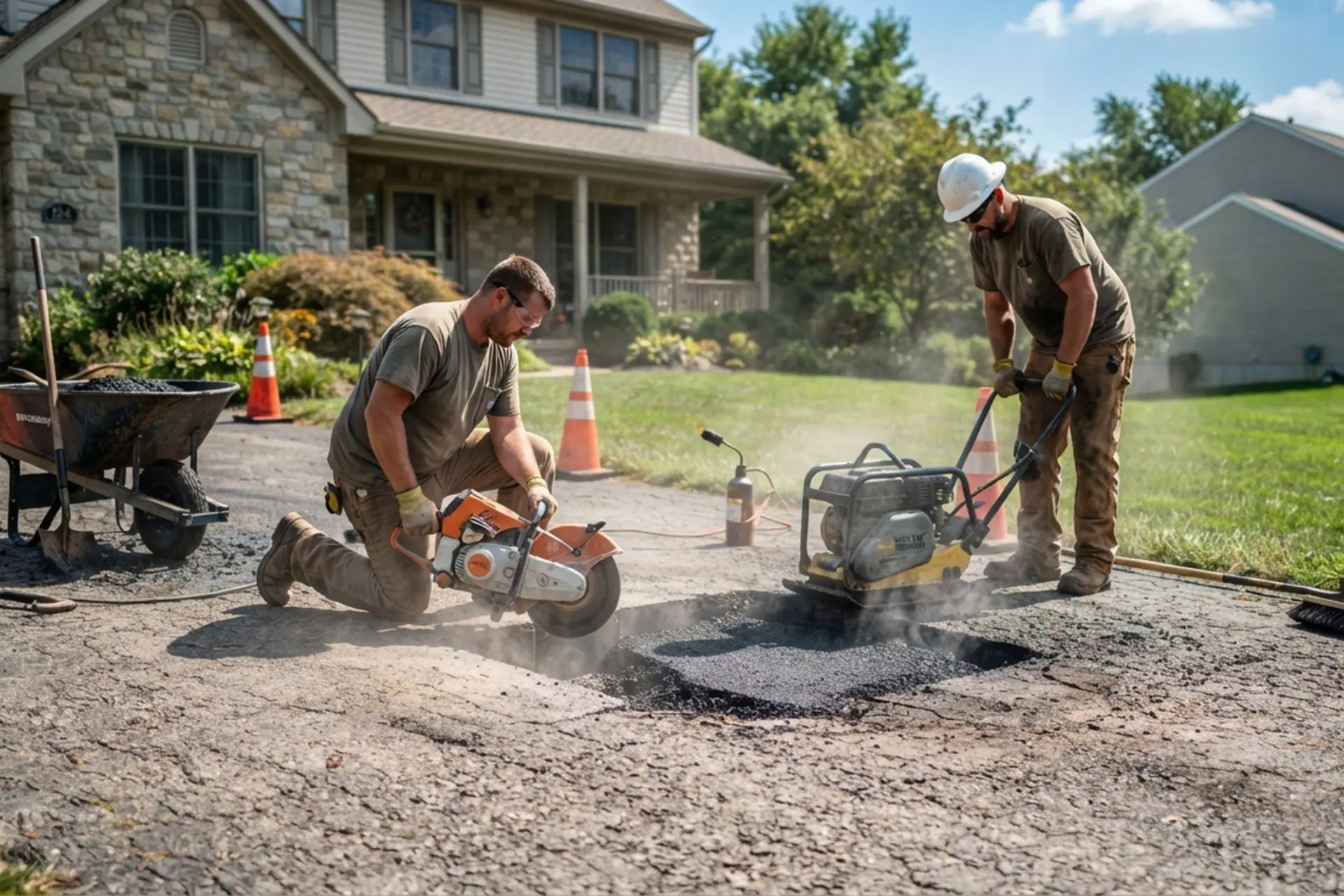
If the supporting material beneath the pothole has weakened, the damaged asphalt may need to be removed so the base can be rebuilt.
Localized repair may involve:
- Cutting or removing failed pavement
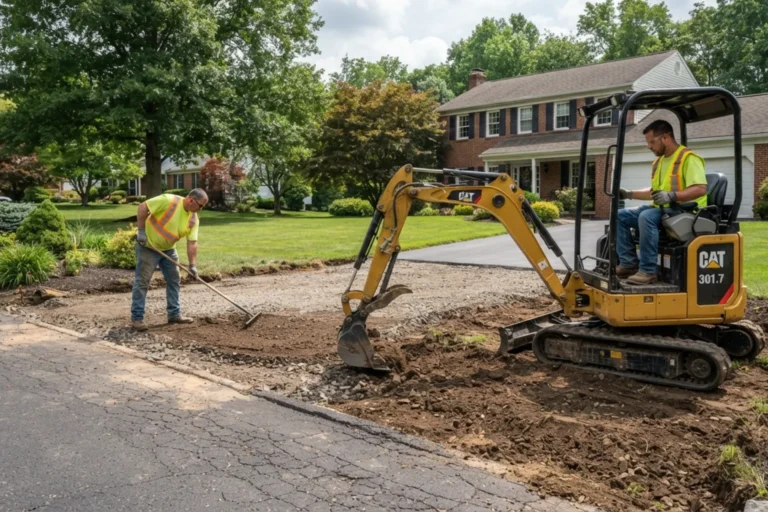
- Excavating loose material
- Correcting the base
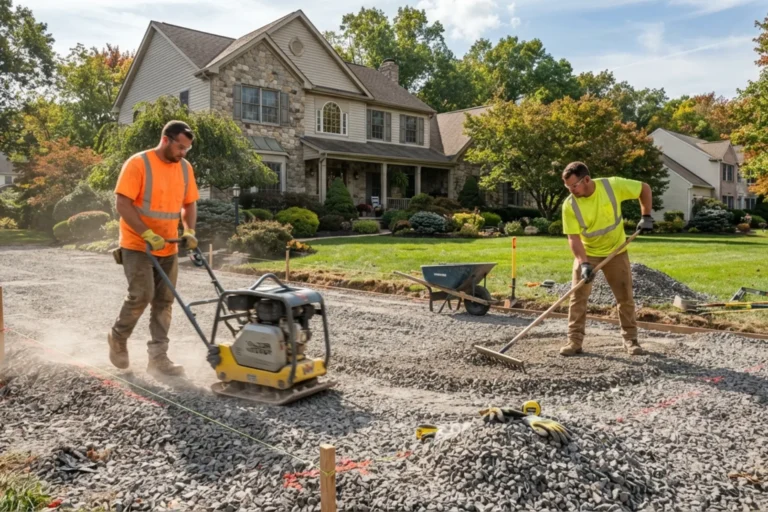
- Compacting new supporting material
- Installing new asphalt
This approach can work when the underlying failure is confined to a specific area.
3. The Rest of the Driveway Is in Reasonable Condition
The condition around the pothole is important.
If the remainder of the driveway has only minor wear, there may be little reason to replace the entire surface.
Localized repair may be more appropriate when there is no significant:
- Settlement
- Alligator cracking
- Edge collapse
- Base movement
- Widespread drainage failure
The goal is to match the repair scope to the actual extent of the problem.
When Potholes May Signal a Larger Problem
Multiple or recurring potholes often deserve closer evaluation.
1. Potholes Keep Returning in the Same Area
A pothole that repeatedly reappears after patching may indicate that the underlying cause has not been corrected.
Possible reasons include:
- Water continuing to enter the base
- Weak aggregate
- Poor compaction
- Ongoing settlement
- Drainage problems
Filling the surface alone may temporarily close the hole while the material underneath continues to fail.
In this situation, the area may need deeper reconstruction.
2. Several Potholes Are Appearing Across the Driveway
One pothole may be localized.
Several potholes across different sections can indicate broader pavement deterioration.
This may suggest:
- Widespread base weakness
- Aging asphalt
- Water infiltration
- Structural cracking
- Extensive settlement
At that point, continuing to patch each hole individually may become less practical than considering resurfacing or replacement.
3. The Driveway Has Alligator Cracking
Alligator cracking is a network of small interconnected cracks that resembles alligator skin.
This type of cracking can indicate that the asphalt surface is no longer receiving adequate support from beneath.
If potholes are developing inside areas of alligator cracking, the problem may be structural rather than localized.
Surface patches may fail again because the surrounding pavement continues to move.
4. Large Sections of the Driveway Have Settled
Potholes combined with depressions or sinking pavement can indicate base problems.
Settlement may result from:
- Poorly compacted material
- Water erosion
- Soil movement
- Previous utility excavation
- Weak subgrade
If several sections of the driveway have dropped, more extensive reconstruction may be needed to restore stable support.
5. Drainage Is Causing Repeated Pavement Failure
Water is a common contributor to pothole formation.
A driveway may develop repeated damage where water:
- Collects in low areas
- Enters cracks
- Runs along pavement edges
- Flows toward the garage
- Reaches the base around drains
Repairing the pothole without addressing the water problem can allow the same failure to return.
Drainage should therefore be considered as part of the repair plan.
Pothole Repair vs. Driveway Resurfacing
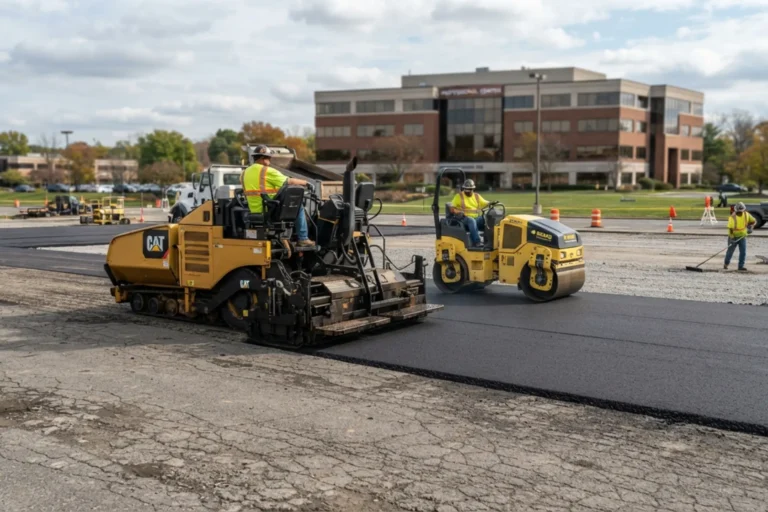
Resurfacing may be appropriate when potholes are limited but the overall driveway surface is worn.
The process generally involves:
- Repairing failed areas
- Preparing the existing pavement
- Correcting localized defects
- Installing a new asphalt layer
A driveway may be a resurfacing candidate when:
- The base is still stable
- Settlement is minor
- Structural cracking is limited
- Existing elevations allow another layer
- Drainage remains functional
Potholes should generally be corrected before the overlay is installed.
Simply placing new asphalt over an unrepaired failed section can allow the problem to affect the new surface.
Pothole Repair vs. Complete Driveway Replacement
Complete replacement may be more appropriate when the pavement and supporting structure have deteriorated extensively.
Replacement allows the old asphalt to be removed so the base can be evaluated.
Weak areas can then be corrected before new pavement is installed.
Replacement may be worth considering when:
- Potholes are widespread
- The driveway has extensive alligator cracking
- Several areas have settled
- Repairs repeatedly fail
- Base erosion is widespread
- Drainage problems have caused extensive damage
The decision should be based on the driveway as a whole rather than the size of one individual pothole.
Why Simply Filling a Pothole May Not Be Enough
A surface patch can only perform as well as the material supporting it.
If loose, wet or unstable material remains beneath the repair, the new asphalt may eventually move or break again.
A more complete localized repair may require removing:
- Loose asphalt
- Broken edges
- Failed base material
and rebuilding the area before installing new pavement.
This is why two potholes of similar size may require different repair approaches.
One may be a shallow surface failure while the other may involve deeper base deterioration.
How Water Creates Potholes
Water can enter asphalt through cracks or broken edges.
Once underneath the surface, it may weaken or erode the aggregate base.
Vehicle traffic then places pressure on pavement that no longer has uniform support.
The asphalt begins to flex and crack.
Eventually, pieces loosen and break away.
The cycle can look like this:
- A crack develops.
- Water enters the pavement.
- The supporting base weakens.
- Traffic causes movement.
- The asphalt breaks apart.
- A pothole forms.
This is why repairing cracks and drainage problems before significant failure develops can be important.
Can Cold Weather Make Potholes Worse?
Yes.
Pennsylvania experiences seasonal freezing and thawing conditions.
When water enters cracks and pavement edges, temperature changes can contribute to movement and surface breakup.
Existing weak areas may deteriorate more quickly.
A small defect before winter can become a larger pothole after repeated freeze-thaw exposure and vehicle traffic.
However, weather is often only one part of the problem.
The pavement base and drainage should also be considered.
What About Potholes Near the Garage?
Potholes near a garage entrance deserve attention because that area involves an important pavement transition.
Problems may develop because of:
- Settlement beside the garage slab
- Water collecting near the door
- Different materials meeting
- Heavy turning or stopping
- Weak base material
The driveway elevation should also be considered.
A repair should maintain practical vehicle access while avoiding unnecessary water movement toward the garage.
What About Potholes Along the Driveway Edge?
Edge potholes may indicate:
- Erosion
- Poor shoulder support
- Vehicles driving off the pavement
- Water runoff
- Broken asphalt edges
The repair should consider not only the missing asphalt but also the support beside the pavement.
Without adequate support, the repaired edge may fail again.
When Is Resurfacing Better Than Repeated Patching?
Repeated patching may become less practical when repairs are needed throughout the driveway.
Resurfacing may provide a more continuous new surface when:
- Base conditions remain stable
- Repairs are still localized
- The driveway has widespread surface wear
- Cracking is repairable
- Elevations allow another layer
However, resurfacing should not be used to cover widespread structural failure.
If the base is moving, new cracks may eventually appear through the overlay.
How We Evaluate a Pothole-Damaged Driveway
A driveway evaluation should consider more than the pothole itself.
Important factors include:
- Number of potholes
- Crack pattern
- Settlement
- Pavement edges
- Surface drainage
- Supporting base
- Garage transitions
- Road connection
- Previous repairs
- Overall pavement condition
These factors help determine whether the appropriate scope is localized repair, resurfacing or replacement.
Pothole Repair Across Bucks County
Delaney Construction Paving provides asphalt repair and paving services for selected properties in Bucks County communities including:
- Perkasie
- Doylestown
- Quakertown
- Dublin
- Warrington
- Mechanicsville
Homeowners with recurring potholes should consider whether drainage, base deterioration or earlier repairs are contributing to the problem.
Pothole Repair Across Montgomery County
Selected Montgomery County service areas include:
- Lansdale
- Montgomeryville
- Harleysville
- Souderton
- Collegeville
- Limerick
- Willow Grove
- Glenside
Driveways may require different repair approaches depending on pavement age, traffic, slope and drainage.
Pothole Repair Across Delaware County
Selected Delaware County service areas include:
- Media
- Springfield
- Upper Darby
- Havertown
- Broomall
- Newtown Square
- Drexel Hill
- Ridley Park
- Aston
- Brookhaven
- Swarthmore
Compact driveways, garage transitions, sidewalks and drainage can all influence the appropriate repair approach.
Request a Pothole and Asphalt Repair Estimate
If your driveway has one pothole, several failed areas or patches that keep breaking down, the first step is determining how far the deterioration extends beneath the surface.
Delaney Construction Paving can evaluate the asphalt, supporting base, drainage, settlement and surrounding conditions before recommending localized repair, resurfacing or driveway replacement.
We serve selected properties throughout Bucks County, Montgomery County, Delaware County and surrounding Pennsylvania communities.
Phone: (610) 938-7569
Email: info@delaneyconstructionandpaving.com
Address: 857 Callowhill Rd, Perkasie, PA 18944