Homeowners often use the words blacktop and asphalt when talking about driveways.
That can make it sound as though they are two completely different paving materials.
In everyday residential construction, however, the terms are often used interchangeably.
Both generally refer to pavement made from a combination of aggregate and asphalt binder that is placed, compacted and used to create driveways, parking areas and other paved surfaces.
The more important question is usually not whether a contractor calls the material “blacktop” or “asphalt.”
What matters more is:
- Base preparation
- Pavement thickness
- Compaction
- Drainage
- Finished grade
- Edge support
- Property use
- Installation conditions
Delaney Construction Paving provides blacktop and asphalt driveway services throughout selected communities in Bucks County, Montgomery County and Delaware County, Pennsylvania.
Here is what homeowners should know before planning a new driveway, replacement or resurfacing project.
Is Blacktop the Same as Asphalt?
In common residential use, blacktop and asphalt generally refer to the same type of pavement.
The terminology can vary depending on:
- Contractor
- Region
- Type of project
- Customer preference
A homeowner may search for:
- Blacktop driveway contractor
- Asphalt driveway contractor
- Asphalt paving company
- Blacktop paving near me
and be looking for essentially the same residential paving service.
There can be technical differences in asphalt mixtures depending on the application, production specifications and intended use, but the words blacktop and asphalt are frequently used interchangeably in ordinary driveway discussions.
Why Do People Call It Blacktop?
The term “blacktop” comes from the dark appearance of newly placed asphalt pavement.
Fresh asphalt generally has a deep black appearance because of the asphalt binder that coats the aggregate.
As the pavement ages and is exposed to weather, sunlight and traffic, the surface may gradually become lighter or gray.
For homeowners, the word blacktop is commonly associated with:
- Residential driveways
- Private lanes
- Parking areas
- Driveway extensions
- Garage approaches
The term asphalt may be used more broadly for both residential and commercial pavement.
What Is an Asphalt Driveway Made Of?
Asphalt pavement generally consists of mineral aggregate combined with asphalt binder.
The mixture is produced hot, transported to the project site, placed and compacted.
But the visible asphalt layer is only one part of a driveway.
A typical paving project also depends on the supporting material underneath.
That may include:
- Existing soil
- Compacted aggregate
- Rebuilt base material
- Prepared subgrade
If the underlying structure is unstable, the asphalt surface can eventually crack, settle or develop potholes.
This is why proper preparation matters regardless of whether the project is described as blacktop paving or asphalt paving.
What Matters More Than the Name of the Material?
Several factors have a greater effect on driveway performance than whether the surface is called blacktop or asphalt.
1. Base Preparation
The pavement needs stable support.
Preparation may involve:
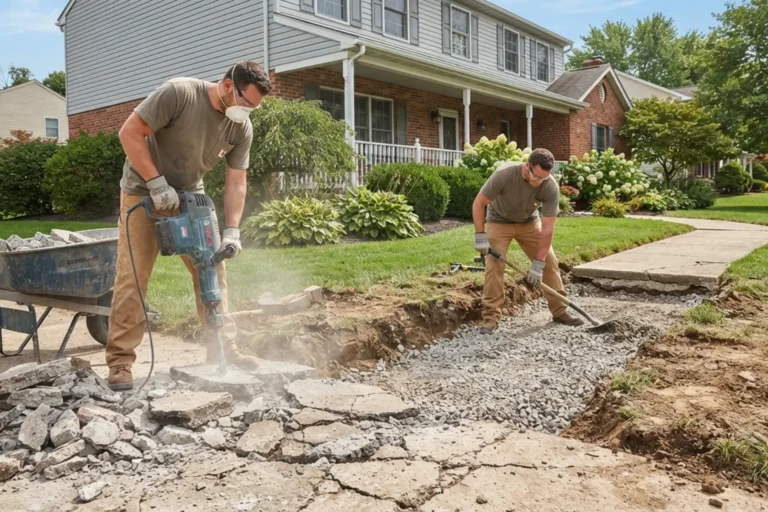
- Removing old pavement
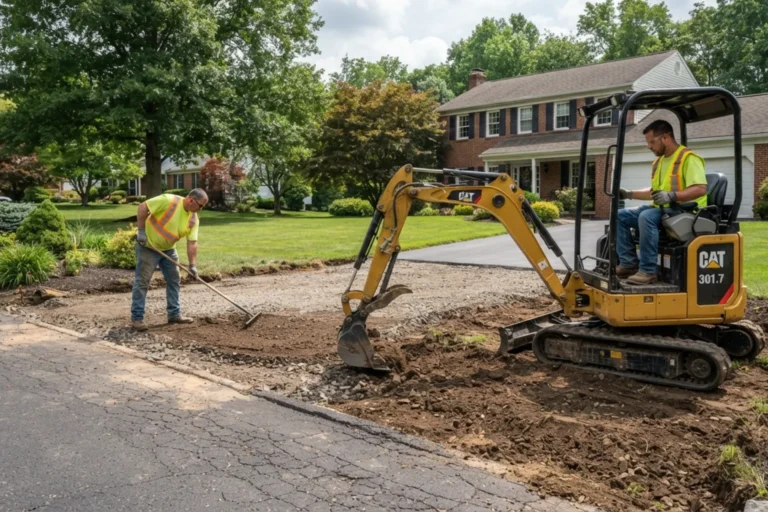
- Excavating weak material
- Correcting soft areas
- Installing aggregate base
- Compacting the supporting material
The appropriate preparation depends on the existing site.
A smooth asphalt surface placed over an unstable base can still develop problems.
2. Compaction
Both the base material and asphalt should be properly compacted.
Compaction helps create a stable pavement structure and reduces unnecessary movement.
Poor compaction can contribute to:
- Settlement
- Rutting
- Cracking
- Uneven surfaces
3. Drainage
Water can affect asphalt pavement from both above and below.
The driveway should be graded so surface water moves appropriately.
Drainage planning may involve considering:
- Garage elevations
- Road connections
- Sidewalks
- Downspouts
- Landscaping
- Retaining walls
- Existing drains
Standing water or water moving beneath the pavement can contribute to base deterioration.
4. Pavement Edges
Driveway edges may be more vulnerable because they lack pavement support on one side.
Poor edge support can contribute to:
- Cracking
- Crumbling
- Settlement
- Broken asphalt
Vehicles repeatedly driving over unsupported edges can make the problem worse.
5. Intended Vehicle Use
A driveway used mainly by passenger vehicles may have different demands from one that frequently supports:
- Work trucks
- Trailers
- Delivery vehicles
- Construction equipment
- Larger recreational vehicles
The intended use should be considered when planning the pavement and supporting base.
Blacktop Driveway Installation
A new blacktop driveway may involve several stages depending on the property.
These can include:
- Removing the existing surface
- Excavating unsuitable material
- Preparing the subgrade
- Installing aggregate base
- Compacting the base
- Establishing the finished grade
- Preparing transitions
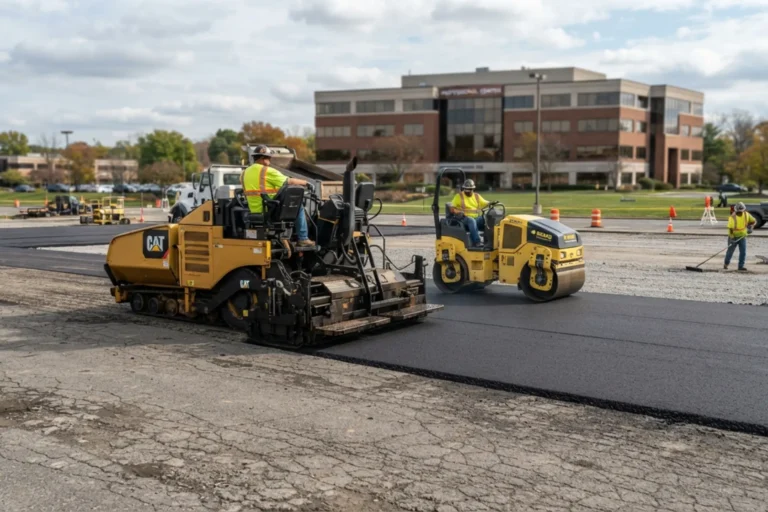
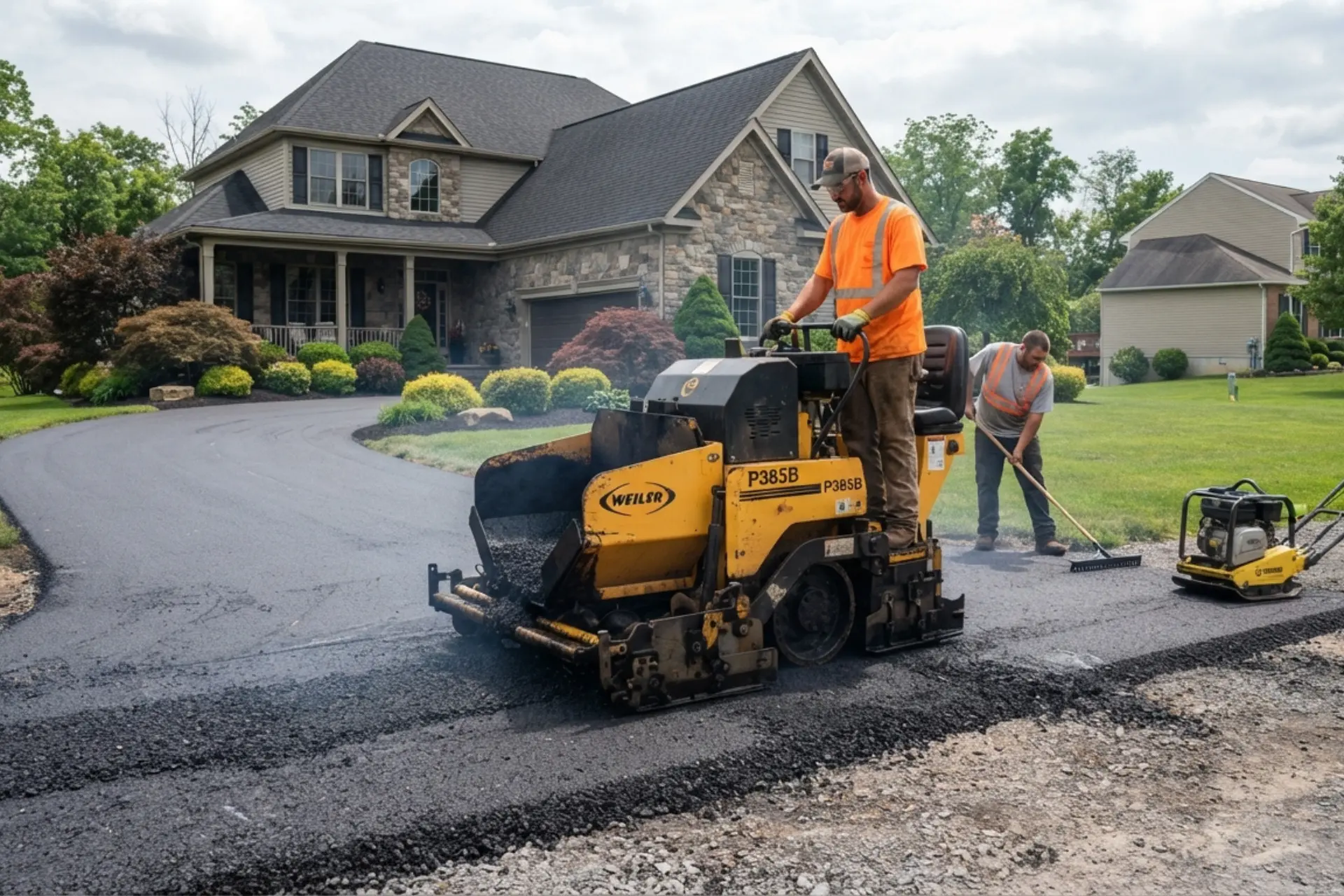
- Installing asphalt
- Compacting the finished surface
The exact process depends on the condition of the existing driveway and site.
For example, a new driveway built over an unpaved area may require different preparation from replacing an existing asphalt driveway.
When Should an Old Blacktop Driveway Be Replaced?
Complete replacement may be appropriate when the driveway has extensive structural deterioration.
Signs may include:
- Widespread alligator cracking
- Multiple potholes
- Significant settlement
- Deep depressions
- Extensive broken edges
- Base failure
- Repeated repair problems
Removing the existing asphalt allows the supporting material beneath the driveway to be evaluated.
Weak areas can then be corrected before new pavement is installed.
When Can a Blacktop Driveway Be Resurfaced?
Not every worn asphalt driveway needs complete removal.
Resurfacing may be appropriate when:
- The supporting base remains stable
- Settlement is minor
- Surface deterioration is widespread but shallow
- Cracks are repairable
- Existing elevations allow another layer
- Drainage remains functional
Resurfacing involves preparing the existing pavement and installing a new asphalt layer over it.
This can provide a renewed surface without reconstructing the entire driveway.
However, resurfacing is not intended to correct major base failure.
Can Blacktop Driveways Be Repaired?
Yes.
Localized asphalt repair may be appropriate when the damage is limited to specific areas.
Examples include:
- Individual potholes
- Broken edges
- Localized depressions
- Failed utility patches
- Damage around drains
- Garage-transition failure
The appropriate repair depends on the condition beneath the damaged pavement.
If the supporting base has failed, the affected asphalt may need to be removed so the material underneath can be rebuilt before new asphalt is installed.
Does Blacktop Require Maintenance?
Like other exterior surfaces, asphalt changes with age, weather and use.
Homeowners should periodically watch for:
- New cracks
- Edge deterioration
- Standing water
- Settlement
- Potholes
- Failed patches
- Drainage changes
Small surface problems may be easier to evaluate before they expand into larger areas.
Maintenance needs vary depending on:
- Pavement condition
- Vehicle use
- Drainage
- Base stability
- Weather exposure
There is no single maintenance schedule that fits every driveway.
Is Asphalt Good for Residential Driveways?
Asphalt is widely used for residential driveways because it can provide a practical paved surface for vehicle access and parking.
It is commonly used for:
- Straight driveways
- Curved driveways
- Longer private approaches
- Garage courts
- Parking extensions
- Turnaround areas
The suitability of asphalt depends on the individual property and project requirements.
A successful driveway should account for more than appearance.
It should also coordinate with:
- Garage floors
- Road elevations
- Sidewalks
- Drainage
- Landscaping
- Retaining walls
Blacktop vs. Concrete Driveways
Homeowners sometimes compare blacktop with concrete rather than asphalt.
These are different paving materials.
Asphalt / Blacktop
Typically:
- Dark in appearance
- Installed and compacted hot
- Common for residential driveways and parking areas
- Can sometimes be resurfaced
Concrete
Typically:
- Installed as a cement-based mixture
- Formed and finished in place
- Uses joints to manage cracking
- Common for driveways, walkways, patios and entrances
The appropriate material depends on:
- Property design
- Intended use
- Surrounding surfaces
- Maintenance preferences
- Elevations
- Project scope
Delaney Construction Paving provides both asphalt and concrete paving services.
Does Asphalt Work for Driveway Extensions?
Yes, asphalt may be suitable for widening a driveway or creating additional parking space.
Before extending pavement, the area should be evaluated for:
- Base preparation
- Property boundaries
- Utilities
- Lawn grades
- Drainage
- Existing pavement elevation
- Edge transitions
Simply paving over lawn or loose material without appropriate preparation can create a weak section beside the original driveway.
The new area should be planned as part of the overall pavement system.
What Causes Blacktop Driveways to Crack?
Common causes include:
- Water intrusion
- Base failure
- Freeze-thaw exposure
- Pavement aging
- Unsupported edges
- Heavy vehicle loads
- Utility settlement
- Previous repair failure
The crack pattern can sometimes provide clues about the cause.
For example, widespread interconnected cracking may indicate more significant structural deterioration than one isolated crack.
Blacktop and Asphalt Driveway Services Across Pennsylvania
Delaney Construction Paving provides asphalt and blacktop driveway services for selected properties throughout:
Bucks County
Including:
- Perkasie
- Doylestown
- Quakertown
- Dublin
- Warrington
- Mechanicsville
Montgomery County
Including:
- Lansdale
- Montgomeryville
- Harleysville
- Souderton
- Collegeville
- Limerick
- Willow Grove
- Glenside
Delaware County
Including:
- Media
- Springfield
- Upper Darby
- Havertown
- Broomall
- Newtown Square
- Drexel Hill
- Ridley Park
- Aston
- Brookhaven
- Swarthmore
Whether a property owner calls it blacktop or asphalt, the same basic factors remain important: preparation, drainage, compaction and the condition of the supporting base.
Request a Blacktop or Asphalt Driveway Estimate
Whether you call it blacktop or asphalt, the performance of a driveway depends heavily on what happens beneath the finished surface.
Delaney Construction Paving can evaluate the existing pavement, supporting base, drainage, access and surrounding elevations before recommending repair, resurfacing, replacement or new driveway paving.
We serve selected properties throughout Bucks County, Montgomery County, Delaware County and surrounding Pennsylvania communities.
Phone: (610) 938-7569
Email: info@delaneyconstructionandpaving.com
Address: 857 Callowhill Rd, Perkasie, PA 18944
Primary CTA: Request a Driveway Estimate
Secondary CTA: Call (610) 938-7569